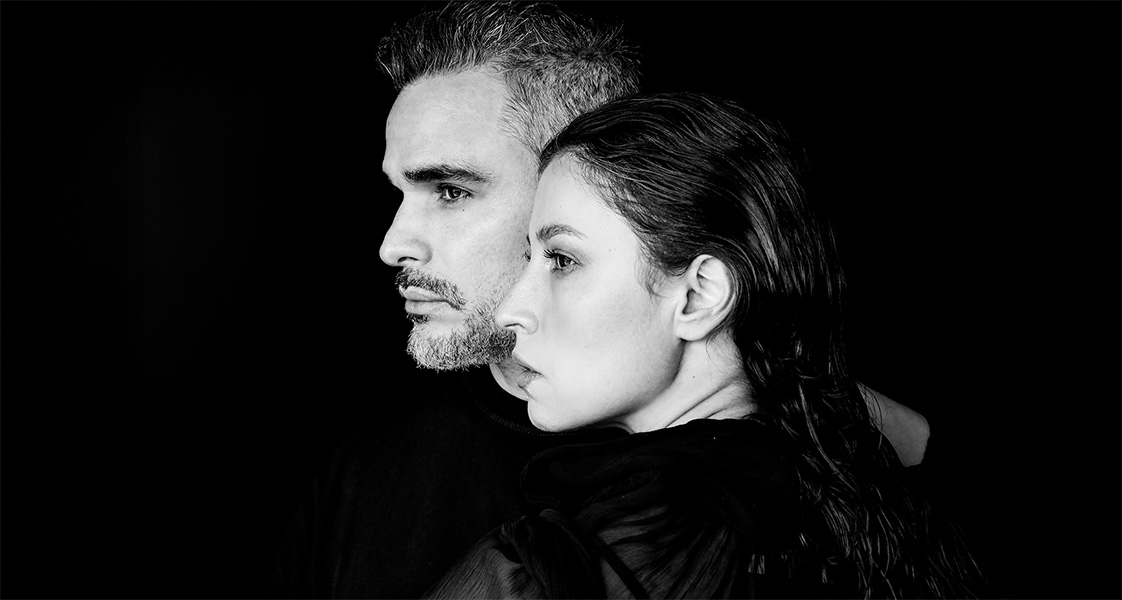
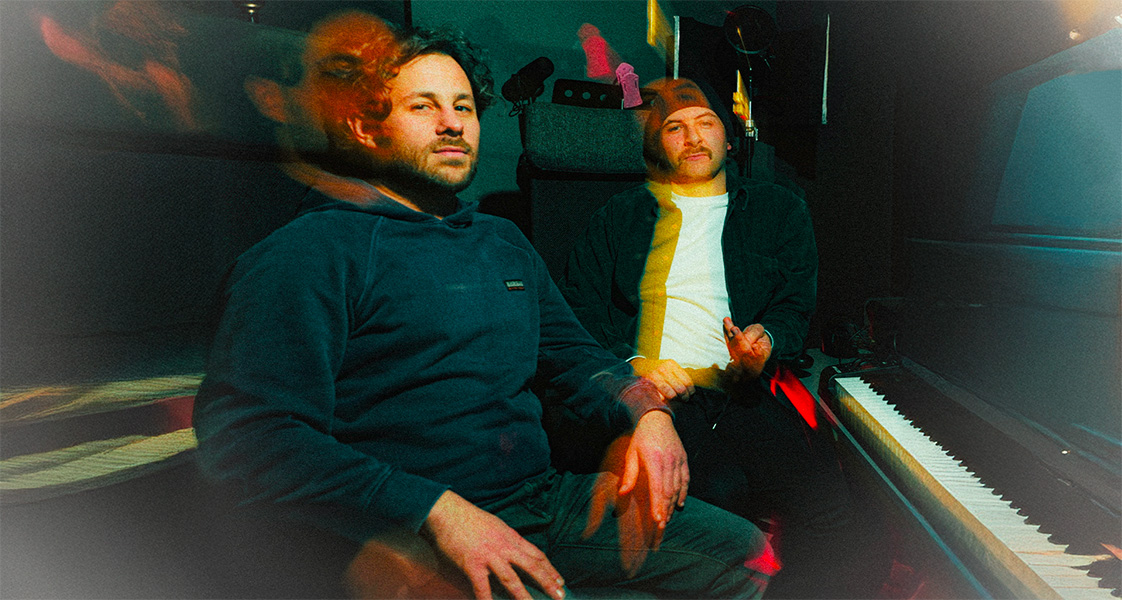
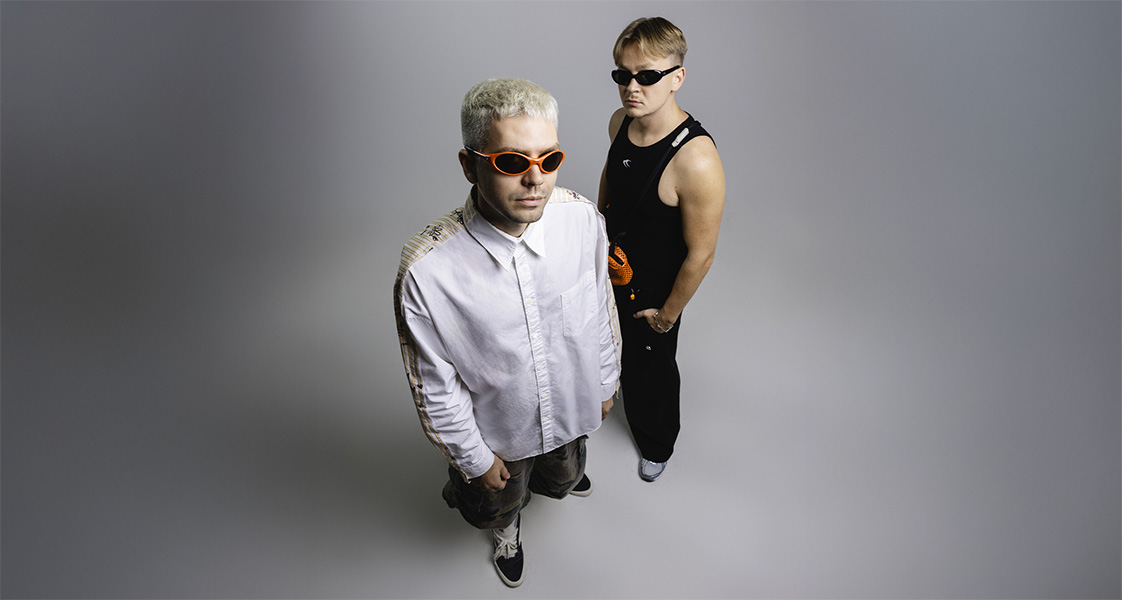
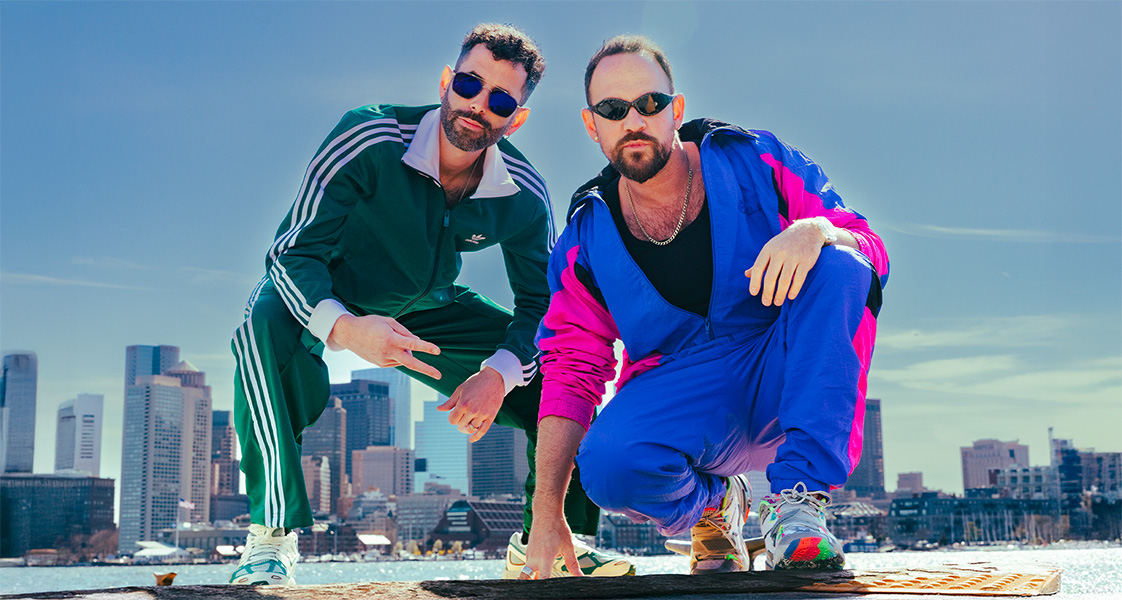
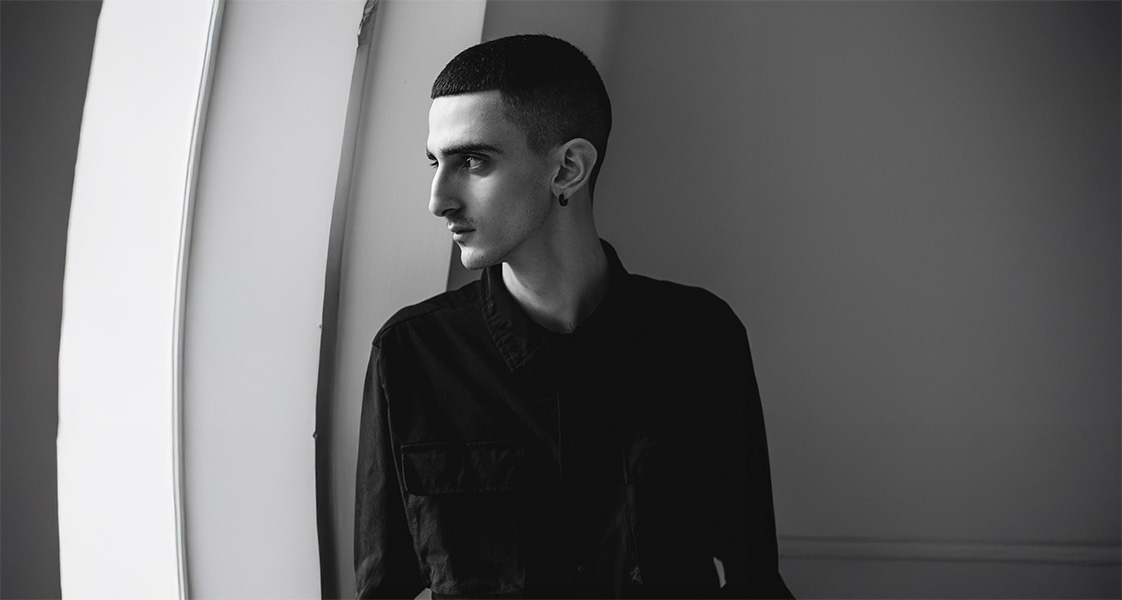
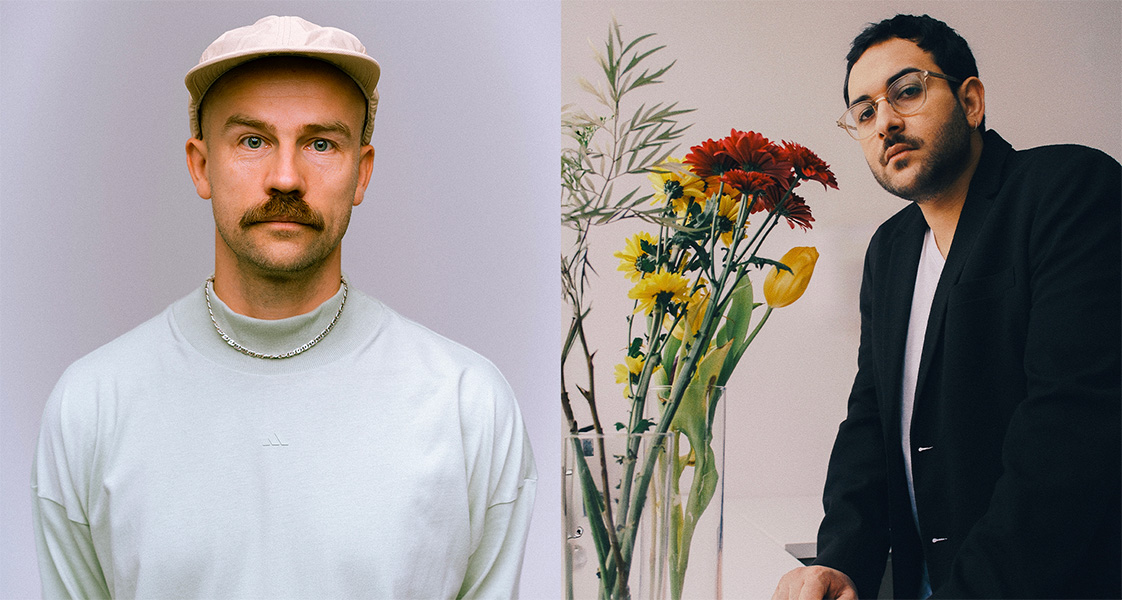
With ‘Underwater,’ Claxy open 2026 by diving deeper into both movement and meaning. The Brazil-born, Germany-based duo blend melancholic indie dance and melodic house with Maculelê-inspired rhythms, funk-leaning percussion, and bilingual intimacy — creating a track that feels equally at home in sunset sets and inward moments. Written over nearly four years, ‘Underwater’ captures a shift: from flow to resistance, and finally to reclaiming presence through rhythm and the body. Ahead of opening for Paul Kalkbrenner in Potsdam this May and continuing their steady rise across Europe, we caught up with Claxy to talk roots, language, freedom, and the emotional architecture behind their latest release.
WWD: ‘Underwater’ took almost four years to reach its final form. What changed — musically or personally — between the first version and the one we hear now?
‘Underwater’ lived with us for almost four years and evolved alongside us. The early versions had a different energy, more contained, more cautious. We kept feeling like something was missing, but we couldn’t name it.
What changed wasn’t just the production. It was us. We became parents, we navigated new creative partnerships, we let go of trying to fit into expectations. The song grew as we grew.
The breakthrough came when Clara wrote a new section in Portuguese. Suddenly, the track made sense. It wasn’t about adding something. It was about finally letting the song say what it had been trying to say all along. The Portuguese wasn’t decoration; it was the missing piece that unlocked everything.
WWD: The Portuguese section seems to be the emotional turning point of the track. What did switching languages unlock for you that English alone couldn’t?
We’re genuinely bilingual. We flip between English and Portuguese constantly in our daily lives. Sometimes a thought just lands better in one language than the other.
What Portuguese unlocks in this context is something else: presence. Using our mother tongue in international electronic music is still rare. Artists like Kölsch and WhoMadeWho have talked about the bittersweetness of hybrid identity, of feeling in-between cultures. We know that feeling well. It’s central to our sound.
When Clara switches to Portuguese in ‘Underwater,’ it’s not a translation of what came before. It’s a change of state. The song moves from openness to grounding, from flow to reclaiming. There’s a line: “Não, não me intimida / Que eu tô de boa” — No, don’t intimidate me / I’m good. That declaration needed to come in our mother tongue. The language shift is identity affirmation. Not a political statement, but simply being Brazilian in a space where that’s still unexpected. And that presence itself shifts something.
WWD: You’ve described the song as moving from flow into resistance. How do you translate such an internal, emotional shift into rhythm and arrangement?
The first half of the track is spacious. There’s room to breathe, to drift. We wanted listeners to feel like they were floating, fully present in their own experience.
Then something interrupts. The Portuguese section enters with more weight, more percussive drive. The maculelê-inspired rhythms come forward. The groove tightens. It’s not aggressive. It’s grounded. It’s someone planting their feet and saying, “No, I’m not leaving this.”
Sonically, we translated resistance as presence rather than force. The shift isn’t a drop. It’s a deepening.
WWD: Maculelê-inspired rhythms and Brazilian percussion play a central role here. How conscious was the process of reconnecting with Afro-Brazilian traditions on this track?
Very conscious, and very personal.
Moving to Germany gave us distance from Brazilian music, which paradoxically helped us hear it more clearly. We started to miss the rhythms we’d grown up with, the syncopation that trained our bodies before we ever studied music formally.
‘Underwater’ was an intentional return. The maculelê influence, the funk brasileiro grooves: these aren’t samples or references. They’re part of how we move, how we feel rhythm. We wanted to bring that back into our sound, but filtered through the production language we’d developed in Europe.
It’s not about being “the Brazilian act.” It’s about letting our roots inform what we create, without treating them as exotic decoration.
WWD: There’s a strong tension in ‘Underwater’ between intimacy and movement — it works for both deep listening and the dancefloor. How do you balance those two worlds when writing?
We’ve always chased a sound that can hold contradictions: joyful and contemplative, light and deep, delicate and strong. That tension isn’t something we solve; it’s something we lean into.
When we write, we’re not choosing between the headphones listener and the dancefloor. We’re trying to create something that moves the body because it moves something internal first. The groove has to serve the emotion, not the other way around.
If the track works at home at 2am with headphones, and it also works at a festival at sunset, that means we got the balance right. Both contexts are real.
WWD: Lyrically, the track touches on subtle interruptions of freedom — judgment, envy, discomfort. Do you see this as a personal story, or a wider reflection on club culture and society?
Both. The song started from personal moments, times when someone’s discomfort tried to interrupt our joy. Not dramatic confrontations, but subtle things. A look, a comment, an energy that tries to pull you out of your flow. As the lyrics say: “Don’t pull me underwater.”
But as we lived with the song, we realized how universal that experience is. Club culture is supposed to be about freedom and expression, but it’s also full of projection and comparison. People carry their emptiness onto dancefloors and sometimes try to fill it by dimming someone else’s light.
‘Underwater’ is about protecting your inner space. Not fighting back, but staying whole. Some people drown standing up. Not because they’re in water, but because they never learned to float.
WWD: Your music often feels more like an emotional progression than a classic build-and-drop structure. How important is storytelling in your production approach?
It’s everything.
We call our process “post-song.” We fragment traditional songwriting to make room for synths and sound design, but the emotional arc always comes first. We’re not building to a drop; we’re building toward a feeling.
Clara’s melodies and lyrics create the narrative spine. Then we shape the production around that, not to illustrate the story, but to let you feel it physically. The bass, the rhythm, the texture changes: they’re all chapters.
We work on songs until they feel ready, not until they fit a structure. Honestly, sometimes we wonder if this works against us commercially. But we’ve come to see that tension as proof we’re authentically striving to communicate something that matters to us. Maybe not the most efficient approach, but that’s who we are.
WWD: Being a Brazilian duo based in Germany, how does living between cultures shape the emotional tone and discipline of your sound?
Brazil gave us chaos, color, and rhythm. Germany gave us space, precision, and technology.
When we moved to Mannheim in 2017, Gui discovered synths and drum machines for the first time. “I felt like a kid in a playground,” he says. That moment changed everything. We started translating what we’d always felt into a new sonic language.
Living between cultures means holding contradictions. We’re nostalgic for Brazil but not trying to recreate it. We’ve absorbed German discipline but haven’t lost Brazilian warmth. For a long time, that tension felt uncomfortable, a source of self-doubt. But we’re learning to see it as the latent space where our creativity thrives. It keeps us on the edge of what we want to say.
We don’t want to be “the exotic Brazilian act.” We want to be artists whose Brazilian soul speaks through a global electronic language.
WWD: You’ll be opening for Paul Kalkbrenner in Potsdam this May — a huge moment. How does sharing a stage with an artist like him influence how you think about scale and connection in your own sets?
We’re deeply honored by this opportunity.
Paul represents something we admire: an artist doing this at the highest level with remarkable consistency. That kind of longevity isn’t just talent. It’s clarity about who you are and what you’re here to do. That’s something we aspire to.
The show at Neues Palais carries weight. It’s a UNESCO World Heritage site, a palace built by Frederick the Great. Playing live for thousands in that setting is a chance to test whether our sound can scale. Can we create the same intimacy we feel in a small club, but for a much larger audience? We don’t know yet. But we’re preparing like it matters.
What inspires us most is Paul’s consistency over decades without compromising. We’re still building that kind of clarity, but opportunities like this sharpen it.
WWD: ‘Underwater’ feels like both a grounding and a step forward. Does this track signal a broader direction for Claxy in 2026 — sonically or thematically?
Yes. ‘Underwater’ is the first release of 2026, and it sets the tone for where we want to go.
A lot has changed for us. We have a new label partnership with Embassy One, and we’re working with Europa Music Management, who believe in the same direction we do. There’s a real sense of alignment now between what we want to create and the team helping us share it.
Sonically, expect more of this: Brazilian roots meeting European production, Portuguese woven into our songs when the emotion calls for it, and tracks that take their time to unfold. We’re not chasing trends. We’re trying to build something cohesive.
Thematically, we’re going deeper into the questions that have always mattered to us. Freedom, presence, expression, the ways people connect and disconnect. The songs are getting more personal, which somehow makes them feel more universal.
2026 feels like the year we may finally sound like ourselves.
WWD: We can’t wait to see how it unfolds! Thanks for the chat 🙂
Thanks!
‘Underwater’ is available here.