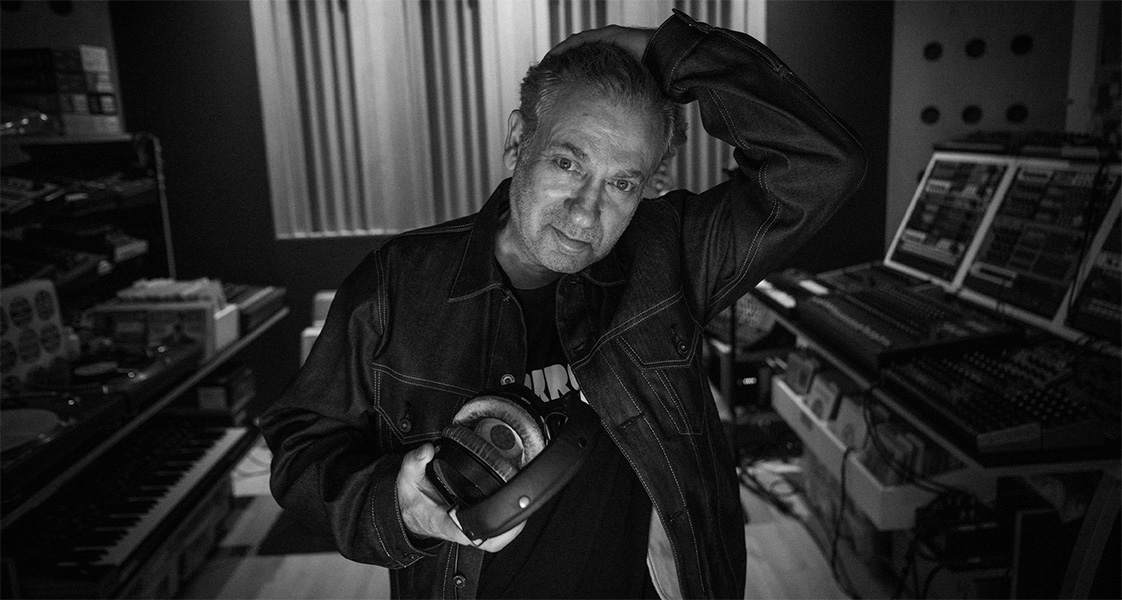
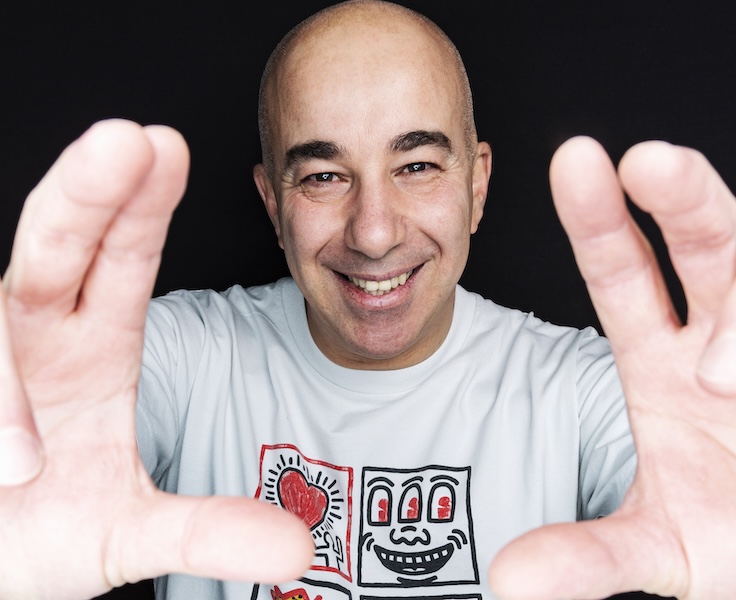
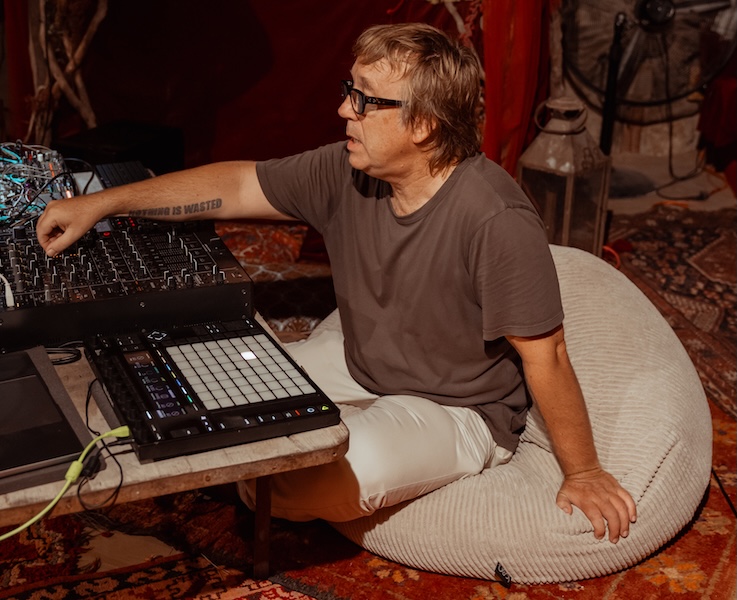
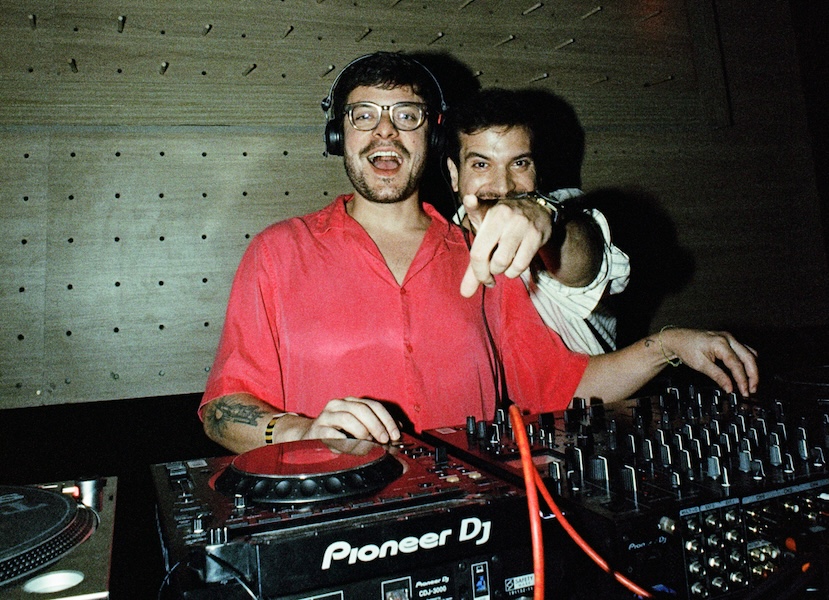
Joseph Salvador has lived more than one musical lifetime. From the early days of Amsterdam’s House explosion to the cult legacy of TINK! Records, from Tomorrow Is Now Kid!’s community-driven club nights to the intimate, self-sufficient world of Universo Positivo, his story is one of reinvention, instinct and deep creative honesty. With a catalogue that spans soulful House, Afro-Latin fusion, Disco, City Pop influences and more, Salvador continues to build a universe entirely on his own terms. He stops by for a chat that traces the roots of that journey – the labels, the aliases, the nights, the rebirths – and the philosophy that keeps him moving forward.
WWD: What was the original vision for Universo Positivo when you launched it, and how close is the label today to what you imagined back then?
Universo Positivo began after a period of stepping back, travelling, and rediscovering my desire to make music. Finding old hard drives full of unfinished work pushed me to build a new studio and start again. Orlando Voorn offering me the Amp Fiddler track became UP001 and set everything in motion.
The vision was simple: a direct outlet for my own music and a small circle of artists I admire, without the machinery or expectations that once pulled me away from creating. Today the label is almost exactly what I intended — minimal, self-sufficient, focused on music and strong visual identity, with artwork by Ron van Roon defining the look.
WWD: You’ve built a very recognisable sonic identity. How do you decide what is and isn’t a Universo Positivo record?
It’s all about sincerity. I avoid anything made to chase trends or appear revolutionary. I like feel-good, soulful, honest music. The label is broad enough to include collaborations with Orlando Voorn, Helder Russo, and my own Afro-Brazilian or early-90s-influenced projects, but the common thread is authenticity.
I only work with people I know and trust, which naturally filters out ego, complexity, and drama.
WWD: Universo Positivo is primarily digital, but this remix EP feels like a milestone moment. How do you see the label evolving in terms of formats and releases?
Vinyl is beautiful but demanding — financially and logistically — for a one-man operation. Digital is immediate and global, while vinyl reaches a small group of collectors. Still, every release has been intentional, and this EP opens the door to more physical editions if the demand is there.
WWD: What do South Bay Jams and MDA Grooves each allow you to express that you can’t do under your own name?
They’re different rooms in the same house. MDA Grooves focuses on Afro-Latin-Brazilian fusion with House, rooted in my early collaborations with artists from Brazil and Ghana. South Bay Jams reflects where I live now on the south margin of the Tagus and my love for early-90s House.
Using my own name would collapse these identities, so each project gets its own space. I also have Salphunk for Disco/Funk and Tokyo Joe Orchestra for my love of Japanese City Pop.
WWD: When you sit down to make music, what tends to come first: rhythm, melody, mood, or concept?
Nighttime is when creativity strikes — silence, no distractions, the world asleep. I usually begin with a single idea: a sound, a feeling, a spark. From there it grows layer by layer, often surprising me. Sometimes it’s effortless, sometimes a struggle, but always energizing. I even set an alarm now to force myself to stop, otherwise I’d work until morning.
WWD: You’ve been producing since the 80s. What has changed the most in your approach to making house music?
Technology. I started before MIDI existed — 64K computers, floppy disks, early samplers, drum machines. I built my own gear and eventually a computer-based studio when tape was still the norm.
Now we live in a hybrid analogue-digital world with AI in the mix. Everything is more accessible, but the essence hasn’t changed: the soul, the groove, the human mind searching for the perfect sound.
WWD: Kai Alce, JKriv, Sean McCabe and Medlar are heavy hitters. What made each of them the right fit for this project?
They chose their own tracks. I’ve admired all four for years, and Kai I’ve known since our TINK! club nights. Each brought their own identity to the music, and having artists of this calibre contribute is a real honour.
WWD: Do you remember your reaction when you first heard each remix? Any moments that surprised you?
I listened to each one in the studio with full attention. I gave no direction — total creative freedom — so what they delivered was entirely their own. Approving them was easy.
WWD: What does it feel like to have your own catalogue reframed through the lens of such respected artists? Any moments that really hit you?
It’s a milestone for me and the label. Each remix carries the remixer’s personality clearly, and hearing my music interpreted through someone else’s heart is something I value deeply.
WWD: Your work with TINK! Records has become cult history. What do you remember most vividly from that period?
House was exploding in Europe, with Rotterdam and The Hague going hardcore while Amsterdam leaned soulful and deep. I was studying classical music when I discovered raves in 1988, and it changed everything. TINK! Records grew fast — our first release sold thousands and led to working with EMI. It was a wild, formative time, full of stories worthy of a book. Eventually I closed the chapter and started a new life.
WWD: Tomorrow Is Now Kid! — The Amsterdam nights were influential. What made that community so special?
My son Alex reignited my passion when he asked for a platform for his DJ work. We built a studio, a label, and a community. With my twin sons, we created nights at Sugar Factory, Club UP, Studio 80 and beyond, always keeping it real and intimate. We avoided big commercial venues and focused on family, friends, and the music we loved.
WWD: How do you feel about the current landscape of deep house and where it’s heading?
I’m old school — the 90s sound is my home. I don’t connect with most commercial deep house, but there’s still great music being released daily. Time is limited, so I focus on what moves me.
WWD: You’ve always been a connector. What can labels and promoters do better to nurture real community ?
Stay small, stay real. I’ve always worked at street level, avoiding big-industry compromises. My advice: be yourself, don’t sell out, stay honest, and keep the Funk alive in the House of Jack.
WWD: What’s the next chapter for the label after this remix EP ?
Keep going, step by step, always searching for that inner song you can’t quite remember. The pipeline is full: MDA Grooves ‘Brazuca Chic’ EP, a new Salphunk EP, more MDA Grooves material, new South Bay Jams, a record with Helder Russo, and a Tokyo Joe Orchestra EP. I’m also planning vinyl albums combining released and new tracks.
WWD: After decades in the game, what keeps you excited about making and releasing music?
The music itself. There was a time I couldn’t listen at all — I only heard the industry behind it. I had to retreat, reset, and rebuild my relationship with music. Now I create freely, without pressure or pursuit of fame, staying close to my roots and my friends.
WWD: If you had to describe the Joseph Salvador sound in one sentence, what would it be?
Young Soul Rebels searching for the Truth.
WWD: What’s the one piece of advice you wish someone had given you at the start?
Relax, don’t do it when they want you to. Do it when it comes from your true self. Listen to your heart. Stay positive.
WWD: Wise words! Thanks for the chat 🙂
Thanks a lot!
The ‘Universo Positivo Remixed’ VA is available here.