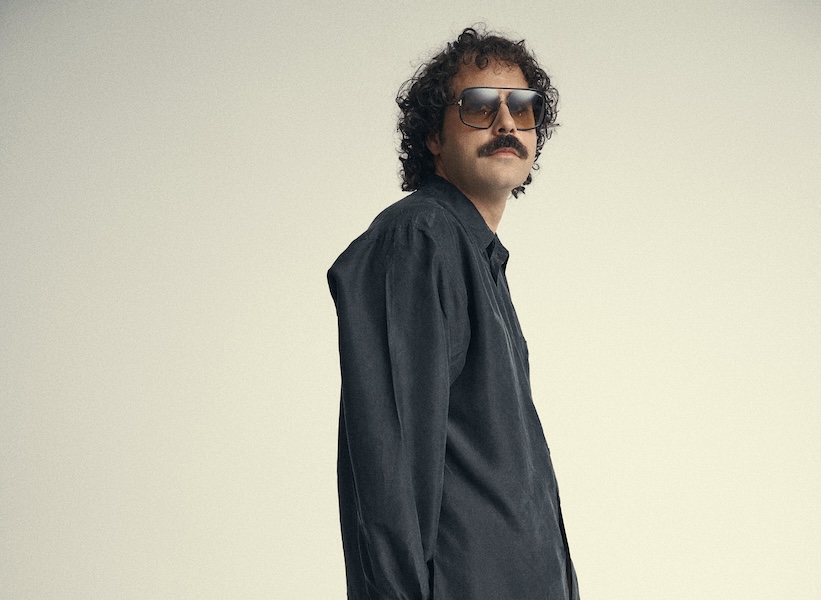
Dennis Liber makes music shaped by movement, memory, and the quiet magic of human connection. Raised between cultures and carried across continents, his sound feels like a warm breeze from everywhere he’s lived: cosmic, groovy, sunlit, and deeply emotional.
After years in the Caribbean and Tulum, surrounded by friends who value intention and freedom, his work has become a reflection of paradise as a feeling rather than a place.
His debut solo EP ‘Astro Danza’ on Razor-N-Tape, captures those moments of joy, release and togetherness. What follows is a conversation with an artist who lives his life the way his music moves: open, curious, and always searching for beauty.
WWD: You have a Greek Turkish background, were born in Switzerland, raised in Greece, and now live in Tulum. How do these different cultures shape the way you approach music and the dance floor?
Yes, I grew up in a multicultural and multilingual family, and that had a strong influence on me, both culturally and in the way I see music. Being surrounded by different cultures from an early age taught me not to be stuck within one point of view or limited by specific traditions. It made me much more open to diversity, and I think you can really feel that in my work and when I DJ.
I have absolutely no boundaries when it comes to language, style, or tempo. For me, if something makes sense in the moment emotionally, I’ll play it. That freedom allows me to connect with people who speak different languages or come from different musical backgrounds, and to adapt to what I feel the dance floor needs while still staying true to my own identity.
WWD: What early experiences with analog synths, drum machines or club culture first pushed you toward production?
My first experiences with dance music are what really led me towards production and eventually to buying my first pieces of hardware. It started when I discovered rave culture and went to my first festivals while living in Greece.
Growing up as a teenager, I was already influenced by my uncle Jamie Lewis and some of the parties of his that I had been to, but the first real spark came from discovering acid house and rave culture, tracks like “Voodoo Ray” and “Move Your Body,” and artists such as State and Mr Fingers.
My first real calling was definitely through Acid, Detroit and Chicago house, but also more Electronica Breakbeats. That eventually led me to buy my first clone and a bunch of MFB drum machines. I started jamming with them and became really interested in the idea of performing live with hardware. I also had a group of friends who were into the same sounds, and we would constantly jam together, making dub techno, electro, acid techno, Detroit house and everything in between.
Later, when I moved to Switzerland, I was already pretty obsessed with analog hardware and really got into it. I started collecting more synths, drum machines, modulars and all kinds of hardware that I was interested in.
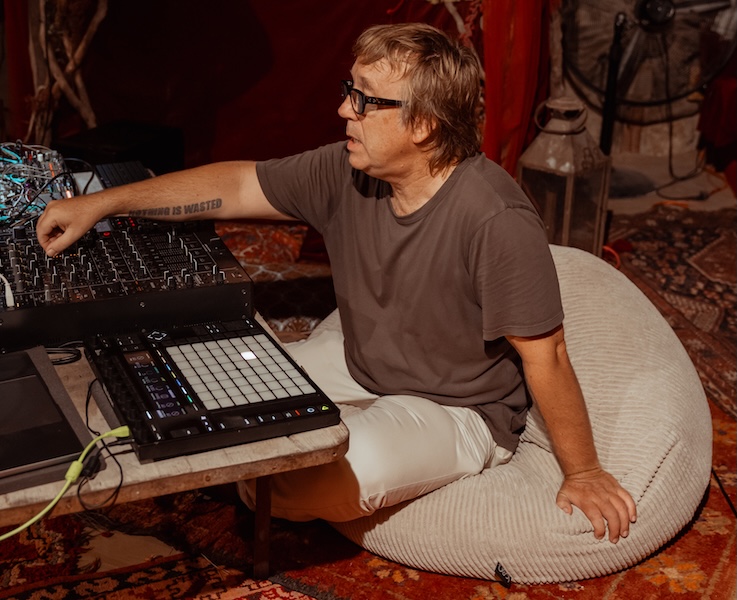
I also had a studio where I would literally lock myself away for days, just playing with my synthesizers and experimenting with sounds. That was a huge part of developing my relationship with production and shaped the way I approach electronic music still to this day.
WWD: Your sets move through cosmic disco, tropical grooves, Afro rhythms, Italo and Detroit textures. What connects all these influences into a single Dennis Liber identity?
Well, I think my main drive is groove, emotion and disco, not as a genre, but as a feeling.
For me, everything I play has some common ground. It might be the sounds, the synths that were used, or simply the fact that there’s usually a funky, groovy element running through its core. I also like my DJ sets to feel like a journey, which is one of the reasons I love playing extended sets. They give me the freedom to move through different genres and emotions and create a story.
I want to introduce people to my music, build the energy gradually, take it to a higher point, and then slowly bring them towards an emotional climax. My goal is for them to leave feeling fulfilled physically, from dancing, but also emotionally feeling free, vulnerable, and like they’ve released some emotional tension.
If I achieve that on a night, then I feel I can go home and be happy with myself.
WWD: You’ve said ‘Astro Danza’ was inspired by four years living in the Caribbean. What did that chapter teach you about freedom, connection and slowing down?
Living in the Caribbean definitely changed how I see freedom, connection and slowing down. Freedom, for me, became more about being comfortable with who I am and not feeling pressured to fit into the boxes that modern city life can create. I met people from so many different countries, ethnicities and backgrounds, and there was a strong sense of acceptance and community. It taught me how important it is to have people around you who make you feel understood and accepted.
Mexico also taught me to slow down, be more patient, follow the flow of life, and respond to things with more calm and understanding.
WWD: The EP was shaped by an international community of friends in Tulum. How did that shared search for a more intentional way of life influence the music?
We make music expressing what lives inside all of us and the intention we try to put into the work we create. So, living somewhere where it’s summer all year and being surrounded by people from different backgrounds searching for a more balanced way of life definitely reflects a lot in the music. It becomes more about joy, freedom, spontaneity, while also learning to let go and embrace the unpredictability of that life. It’s like a sonic manifesto of our life in that time period.
WWD: What does paradise mean to you now, after living inside a community built around creativity and human connection?
Since I was a teenager, I’ve definitely been a dreamer, always searching for paradise. After all these years of pursuing it and trying to relive moments that felt like paradise to me by going back somewhere and trying to find that feeling again, I’ve realised that paradise is more about the magic created through human interaction, emotional connection and emotional intelligence. It happens naturally. You can’t force it to happen, you can only flow through life and accept it, and then the universe will bring it to you when the time is right.
For me, paradise is an emotional state that comes from human connection, respect, great music, and of course, beautiful surroundings definitely help too.
WWD: This is your first solo EP on Razor N Tape. What made this the right moment to step forward with a full project?
I think the timing was more intuitive than intentional. We’d been talking about this EP for quite a while, and the timing changed a few times, but I trusted the process and the guys behind Razor N Tape because I could feel their genuine interest in the music and that they wanted to bring the best out of it. I knew that whenever it happened, it would be the right time.
WWD: The EP blends zouk, disco, jazz, Balearic and funk. How did the production evolve across multiple studios and countries?
The process was quite organic. Sometimes I would start a project alone, sometimes with someone from the beginning, and then the tracks would evolve through different studios, home setups, apartments and wherever I happened to be. I am also really thankful for all the great friends I have around the world.
Moving between Mexico, Europe and Canada, the music was also influenced by the gigs I played, the people I met and the cultural exchange happening around me, so all of that naturally found its way into the sound.
WWD: ‘Astro Danza’ is described as a hypnotic Balearic night journey. What was the spark behind that track’s mood and movement?
The spark was definitely my love for house, Latin, New York and Balearic house, proto house, and even more jazzy and psychedelic sounds.
It’s basically my own idea of what eclectic dance music can be, bringing different influences together while still keeping it hypnotic and made for movement.
WWD: ‘Être Heureux’ celebrates freedom and simple happiness. How did that feeling emerge during the writing process, and what did Anoraak bring to the remix?
The song was made amidst exactly those feelings. All of us were living a simple life, enjoying nature and what it had to offer, just trying to be happy.
I started the music project in my studio at home in Tulum and later brought it to my friend Rocco’s studio, where he re-recorded the bass, adding his character, and the guitars.
After I continued working on the song and was getting really excited about it, I felt that Chäm’s writing, voice, emotion and the fact that she also loved zouk made perfect sense for it. The story behind the lyrics and title is Chäm’s inspiration and perfectly matched the music’s playful and tropical character.
I think Anoraak’s remix gives the song a new interpretation, with a more house oriented feel and a modern flavour, making it perfect for DJ mixes. I am really happy with what he created.
WWD: ‘Femme Papillon’ is a dreamy tribute to feminine freedom. What inspired that narrative, and how did you translate it into sound?
This one was also created around the same time as Être Heureux. We were making a lot of music with Shoao at his studio. I brought in an idea for a slow grooving, disco-ish and emotional song, and we just jammed for many days, trying different things until it evolved into a full instrumental song with a very emotional contrast in the chorus and followed a more traditional song arrangement.
Again, we brought Chäm into the team to add her amazing songwriting and vocals, matching the emotional character of the song. She came up with the woman butterfly story, pulling inspiration from her life experiences, while Felipe Ribeiro added the synth solo.
WWD: Across the EP, you explore different shades of paradise. What shade feels closest to where you are personally right now?
As I mentioned earlier with my concept of how I see paradise, I think I’m still very much connected to all those different shades of paradise. They’re definitely all part of where I am personally right now because each one connects with different parts of myself.
WWD: You’ve worked with artists from France, Argentina, Greece, Serbia and Switzerland. What makes a collaboration meaningful for you?
For me, a collaboration starts from a mutual interest in each other’s world, and from genuine connection and respect. When you meet a fellow artist and you click, it can naturally lead to collaborating.
I also feel that making great music is most of the time collaborative, mostly because when everyone brings their own skill and flair, the result becomes multidimensional and each element carries its own character. It’s also important to be a bit selfless in some cases, to compromise when it’s needed, and to find what is best for the project while being fair to all contributors and participants.
WWD: How do you balance your warm, emotionally driven selections with the hypnotic grooves that define your late night energy?
I think these two things kind of balance each other. Sometimes the dance floor asks for more groove to drive the night, but at other moments it asks for an emotional release and a small moment to breathe. It’s this dynamic variety that makes a night more magical and helps create a story, and also something that is reflected in creating a song.
WWD: What role does community play in your studio process? Are you someone who thrives on shared input or quiet solitude?
I think I really enjoy existing in both scenarios. Creating with others is a beautiful experience, but I equally enjoy working on my own and spending long periods of time alone in the studio. They both have a different kind of charm.
A lot of the work in some of my projects happens quite independently, while at other times I’m co creating with someone and we’re shaping the work together throughout the whole process.
I also think collaboration is a kind of school in itself. When you work with someone, you exchange knowledge, skills, ideas and ways of approaching things that you might not have discovered on your own.
Sometimes another artist’s input can open up something I wouldn’t have found on my own, and sometimes I need the space to follow an idea privately and develop it in my own way. I really value both sides of that process.
WWD: Club Eden has become a community driven platform in Tulum. What was the original vision behind it, and how has it evolved?
Club Eden was a series of parties in Tulum that we co-created with Irving Diptera, who was a bar owner, actor, writer, and a very important figure in the queer community of Tulum.
We combined our strengths and vision to create events, hosting DJ friends from all over the world who were visiting, like Nickodemus, Tigerbalm, Peter Croce and more.
We created a safe space where everyone was invited as a guest, as long as they were respectful and welcoming to one another. It was a space mostly for the locals to have fun and connect.
It’s been a while since we stopped doing the monthly events, as we both got busy and Tulum changed a lot. But we still create some events when the circumstances bring us there. So, in a way, Club Eden is still there; it just happens more organically now, whenever the right moment comes.
WWD: You’ve played everywhere from Pikes Ibiza to Departamento in Mexico City. What have these dance floors taught you about connection and energy?
I’ve been travelling a lot over the past years and have been lucky enough to play in some really amazing dance floors like the ones you mentioned.
One of the most important things I’ve learned is that no matter how well you prepare a set, the night will always surprise you and take you in different directions. It made me understand that as important as it is to be prepared, it’s equally important to adapt to whatever the dance floor is asking for and help people enjoy themselves especially when you travel through different countries that often and perform for different crowds.
WWD: What’s one moment behind the decks that still stays with you?
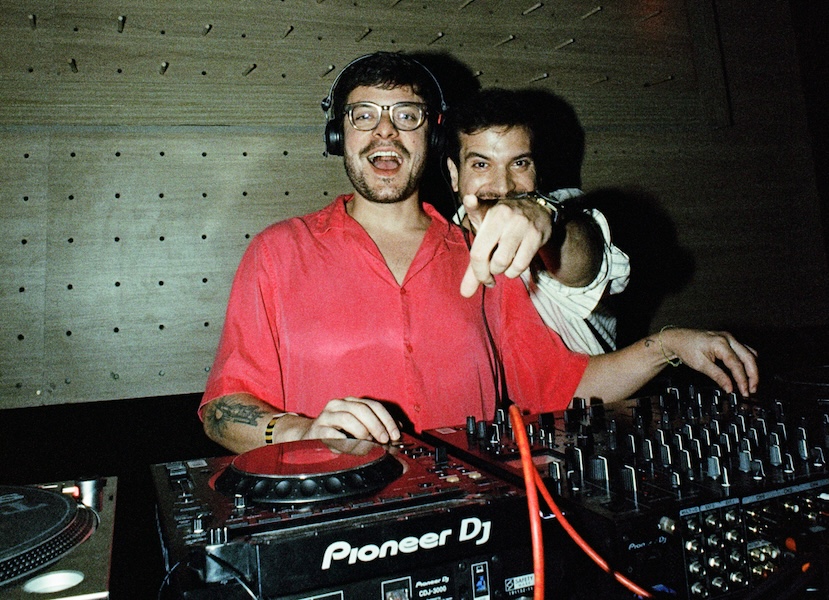
It’s hard to pick one moment because there have been so many, especially in Mexico, where many parties felt like a literal dream. But my gig at Pikes was really memorable. I played Wham’s “Everything She Wants” at the end of the night, and everyone, including the staff, was dancing and closing the night together.
WWD: You have upcoming releases on Polyamore Records and B2 Recordings. What direction are you exploring next?
I’m really happy about the Polyamore EP, which follows a similar approach to creating original songs. The B2 release is more housy, with a straightforward sample based house approach taken from an older period of my work. I’m very happy to be among artists I respect and to be part of a Greek founded label.
I’m always creating and experimenting, lately focusing a bit more on the dance floor, while still enjoying making more laid back and song driven things too. So, as usual, a bit of everything that I like and hopefully you will be listening to more of that work soon.
WWD: If listeners could take one feeling away from ‘Astro Danza,’ what would you hope it is?
I think I’d hope they feel that this record is a kind of testament to our lives during those years. And maybe it can be a little reminder to stay creative and to live your life the way you want to, whenever we forget to do that because I think we all do sometimes.
If you want this in magazine layout, Q A blocks, cleaner spacing, or alphabetised sections, I can do that too.
WWD: We love that! Thanks for the chat 🙂
The ‘Astro Danza’ EP is available here