

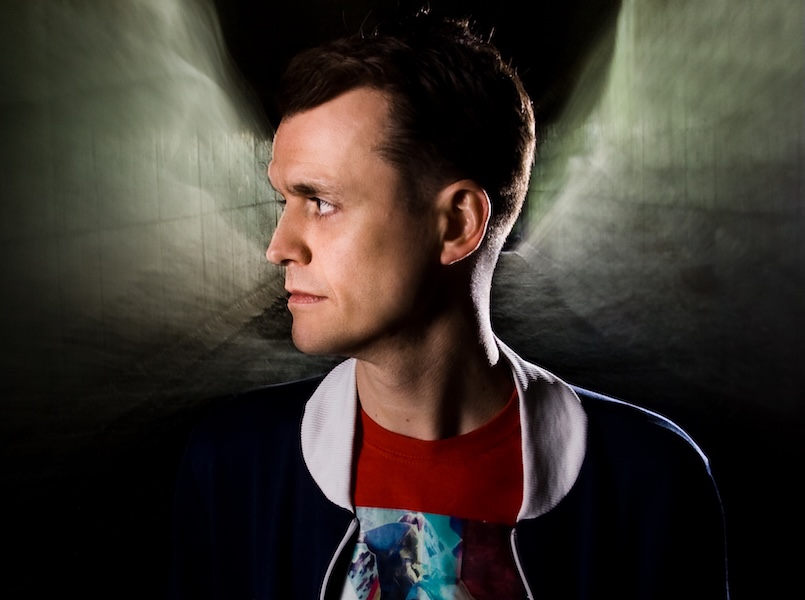
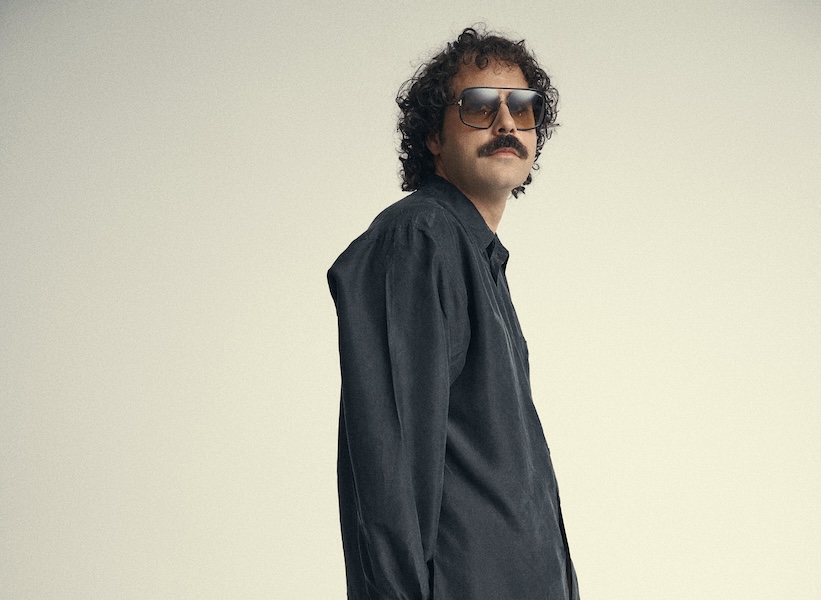
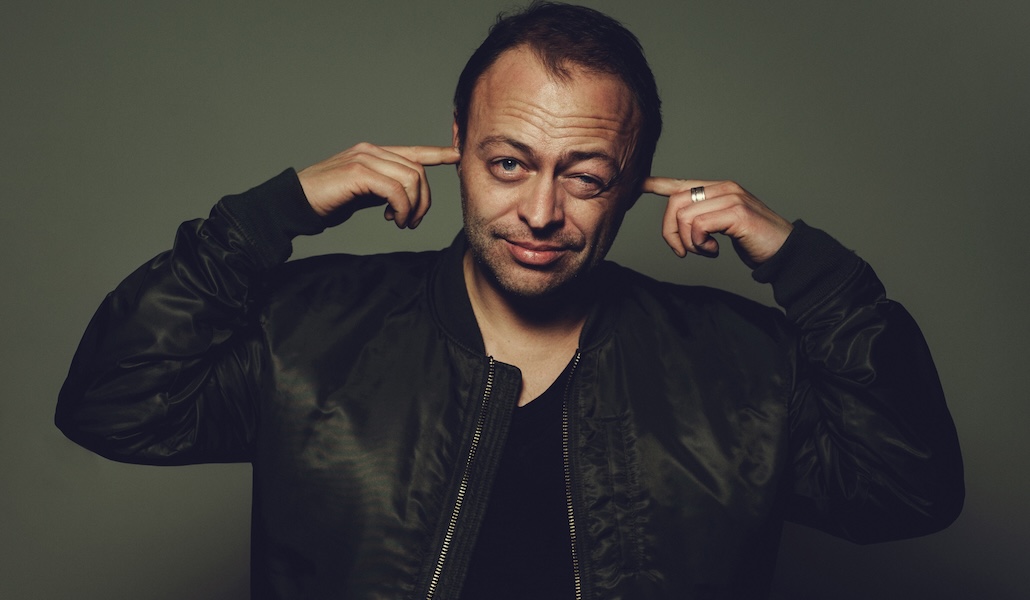
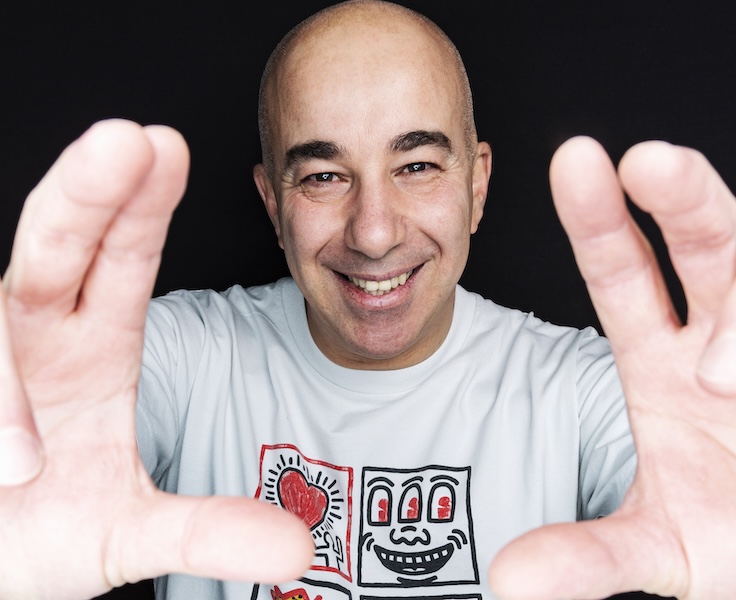
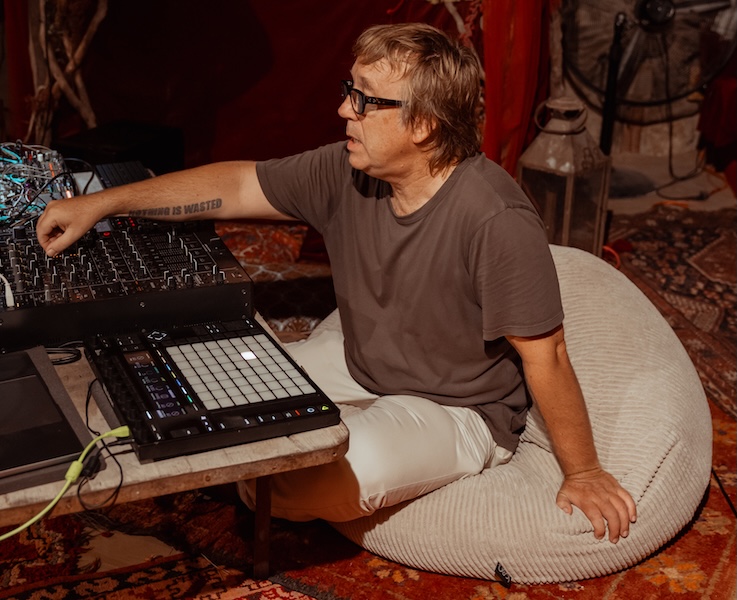
Pedro Gariani has spent the last few years building a career that sits at the intersection of house music, Brazilian culture and club culture. From appearances at Tomorrowland Brasil, Time Warp, and HÖR Berlin to opening for names including Fatboy Slim and Laurent Garnier, his profile has continued to grow both in Brazil and internationally.
Now, with his latest release ‘Saci’ on ¡Queer y Latina!, Pedro brings one of Brazil’s most recognisable folklore characters into the world of percussive house. Inspired by the mischievous figure he grew up hearing stories about, the track explores how Brazilian identity, folklore and local musical references can travel through a global dancefloor without losing their roots.
Alongside his music, Pedro is also the founder of ¡Queer y Latina!, a label and platform created to expand the circulation of queer Latin American electronic music, as well as co-founder of Cardume. We caught up with Pedro to talk about ‘Saci,’ his Brazilian identity, building ¡Queer y Latina!, his journey internationally, and the evolving electronic music scene in Brazil.
WWD: ‘Saci’ takes a character you grew up hearing about and puts it into a club context. What was it about ‘Saci’ that made you think, “this could become a track?”
When the idea for ¡Queer y Latina! first came up, I knew I wanted one of my releases to bring Brazilian roots into the project. Sometimes, as Brazilians, we forget to see ourselves as part of Latin America too, even though our culture is incredibly rich and diverse.
Brazilian folklore is something we grow up with, and Saci is one of those characters that feels instantly familiar. Music and the dancefloor are universal ways of connecting people, so bringing Saci into that context also felt like a way of introducing this emblematic figure to people who may never have encountered his story before.
That became the starting point for the track: taking something deeply connected to my childhood and culture, and translating it into the language I use today, which is house music and the dancefloor.
WWD: There’s a really interesting tension in the record between something deeply Brazilian and a sound that could work on a dancefloor anywhere in the world. How do you approach keeping that cultural identity intact without making the music feel overly literal?
That balance is very important to me. I don’t think Brazilian identity in music needs to be explained through obvious symbols all the time.
With “Saci”, the references are there, but they are integrated into the language I already use as a producer, the structure and energy are still very much connected to the house music.
For me, cultural identity feels more interesting when it becomes part of the musical vocabulary rather than something added on top of it. I want someone in Brazil to recognize certain references, but I also want someone who knows nothing about Saci to hear the record in a club and connect with it immediately.
WWD: You’ve described ¡Queer y Latina! as a platform rather than something tied to one specific sound. What did you feel was missing from the existing electronic music landscape that made you want to build it?
I felt there was space for a platform that could connect queer artists from across Latin America without forcing everyone into the same aesthetic.
For me, ¡Queer y Latina! is much more about perspective and community than genre. I wanted to create a space that could give visibility to queer and Latin American artists, connect different scenes across the region, and allow the music to be as diverse as the people making it.
WWD: With the label, Cardume, your own productions and your work as a curator, you’re operating in quite a few different roles. Do you see yourself primarily as an artist, a curator, or is that distinction becoming less relevant to you?
I still see myself first as an artist, because everything else started from my relationship with music and the dancefloor. But the distinction has definitely become less important over time.
Curating a label, building a party or making a record all come from a similar place for me. They are different ways of creating context around music.
I really enjoy thinking beyond my own DJ sets or productions. Sometimes the most interesting part is connecting people, building a lineup, introducing an artist to a new audience or creating a platform where something can happen.
WWD: You’ve played some pretty significant stages and platforms internationally, from Pikes Ibiza and Tomorrowland to HÖR Berlin. Was there a particular moment where you felt, “Okay, my music and what I’m building in Brazil is genuinely travelling now?”
I don’t think I’ve had that feeling yet. Of course, reaching all of these places has been amazing, and each one was special in a different way, but I try to look at those moments with my feet on the ground.
None of them on their own is capable of changing a career, so I’m always thinking about what comes next and what the next moves are to take my music even further.
I think I’ll probably recognize that feeling more clearly in retrospect. For now, I still feel very much in the process of building.
WWD: How would you describe the Brazilian electronic scene to someone who has never experienced it, and what do you think people outside Brazil still misunderstand about it?
It is incredibly diverse and probably much harder to define than people outside Brazil sometimes imagine.
Brazil has huge commercial electronic festivals, strong underground scenes, queer parties, regional movements, funk, house, techno and many hybrid scenes that constantly influence each other.
I think one misunderstanding is the tendency to look for one specific “Brazilian sound”. Brazil is too large and culturally diverse for that. São Paulo alone can offer completely different nightlife experiences on the same night.
What I find particularly interesting is how open Brazilian dancefloors can be. Many events manage to bring together people from very different scenes and communities around the same purpose, and I find that fascinating. There is often this ability to cross boundaries between different tribes without losing the sense of a shared dancefloor.
WWD: There’s obviously a huge amount of musical and cultural diversity within Brazil itself. When you’re making a track like ‘Saci,’ how conscious are you of representing your Brazil rather than trying to represent Brazil as a whole?
Very conscious. I would never want to suggest that one track could represent Brazil as a whole.
“Saci” comes from my own relationship with Brazilian culture, the references I grew up with and the music that surrounds me. It is my interpretation of something that belongs to a much larger cultural history.
Brazil is made of many different Brazils. I think it is much more honest for artists to speak from their own experience than to try to create something that claims to represent an entire country.
WWD: You’ve opened for artists like Fatboy Slim and Laurent Garnier, while also appearing within spaces connected to Glitterbox, HE.SHE.THEY and The Blessed Madonna. Has being around artists from very different parts of club culture changed the way you think about your own sound?
Definitely. Being exposed to very different artists and audiences constantly reminds me that there are many ways to create a powerful dancefloor.
What I admire in artists like these is that they usually have a very clear identity, even when their references are extremely broad. That has encouraged me to trust my own versatility more.
I’ve never wanted to be restricted to one narrow definition of house music. I like disco, acid, electro, percussion, classic house and many other things. Seeing artists move confidently through different parts of club culture made me understand that consistency does not necessarily mean sounding the same all the time. It can also come from having a clear point of view.
WWD: If you could take one element of Brazilian club culture, a rhythm, a ritual, a way of partying, an attitude, anything, and transplant it into dancefloors anywhere in the world, what would you choose and why?
I think it would be this sense of joy. Brazilians have an incredible ability to find happiness and celebrate even in difficult circumstances, and I think that translates very strongly to the dancefloor.
There is something very powerful about the way people come together, let go, dance, sing and create a collective sense of joy. If I could take one thing from Brazilian club culture and bring it everywhere, it would be that attitude.
WWD: And one slightly more mischievous one: if Saci himself suddenly turned up at one of your sets, what do you imagine he’d make of the way you’ve turned his story into a house record?
I think he would probably cause some chaos before giving me his opinion.
But considering how mischievous and unpredictable he is, I like to imagine he would understand the idea. A dark room, loud music, people moving around, disappearing into smoke and lights… It actually feels like a pretty natural environment for Saci.
I just hope he won’t steal my USBs.
WWD: Haha, we hope so too! Thanks for the chat 🙂
‘Saci’ is available here