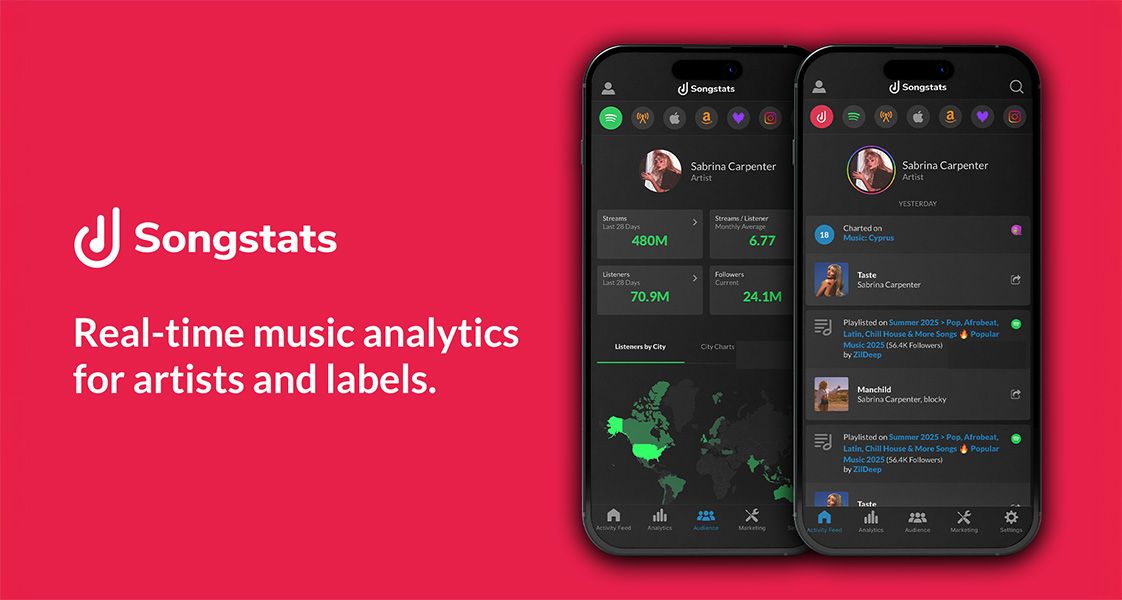


For most artists, the numbers that matter are scattered across a dozen places: streams on Spotify, chart positions on Beatport, Shazams, radio spins, follower growth on TikTok and Instagram, and the 1001Tracklists records of who’s actually playing your track in the booth. Songstats was built to bring all of that into a single view, and in the years since it has grown into The Stats Company, a family of products spanning Songstats, Socialstats, Radiostats, Songshare and Playlistcheck that together cover nearly every signal in an artist’s career.
Built by the team behind 1001Tracklists, the platform has always had electronic music in its DNA, and it shows in the data it prioritises: DJ support, Beatport and Traxsource chart movement, SoundCloud activity, the signals that tell a producer whether a record is connecting in clubs and festivals, not just on playlists. Its newest move may be its most ambitious yet. New MCP servers let users plug their Songstats and Socialstats data directly into AI tools like ChatGPT, Claude and Gemini and simply ask questions of it, a shift from reading dashboards to having a conversation with your own numbers.
We caught up with James from Songstats to talk about where the ecosystem is heading, why social performance now sits alongside streaming data as a measure of an artist’s momentum, what the MCP integration changes about how artists work, and the three features he thinks every artist should have switched on.
WWD: The Stats Company has evolved from Songstats into a much broader ecosystem spanning music, radio, social and collaboration data. How do you see the relationship between Songstats, Socialstats, Radiostats, Songshare and Playlistcheck today? Is the long term vision a single intelligence layer for the entire music industry?
James: All of our products are built behind the same idea – we want to make data easier to access, understand and leverage.
Songstats started because we saw how difficult it was for artists and teams to understand what was happening with their music across the industry. The information was spread across streaming platforms, playlists, charts, radio and social media, with no easy way to see the full picture.
As we’ve grown, we’ve applied that same thinking to other areas. Radiostats makes radio airplay data more accessible, which is important for both independent and major artists. Socialstats helps creators, brands and influencers understand how their content is performing and how their audiences are engaging. Songshare gives artists an intuitive way to promote their music through smart links, while Playlistcheck helps them better understand playlist performance and the impact playlists can have on their music. Each product has its own purpose, but they are all part of the same wider vision.
Our MCP servers are taking this a step further. Users can connect their Songstats, Radiostats and Socialstats data to their preferred AI and ask questions across all of it. That gives AI the ability to spot relationships between different areas of an artist’s career and provide a more complete view of what’s happening.
WWD: Songstats has deep roots in electronic music. How has that shaped the platform, and what kinds of data can DJs and electronic artists access that they might not find elsewhere?
James: Songstats was built by the same team behind 1001Tracklists, so we’ve always had a strong understanding of the data that matters to DJs, producers and electronic artists.
The DJ support metric from 1001Tracklists is a big part of that. Knowing that another DJ has played your track can be an important signal that it is connecting in the club and festival world. Support from the right DJs can build credibility, create awareness and lead to new opportunities, whether that’s a collaboration, remix, label signing or booking.
You can hear Kelly Reverb talking about how he discovered major DJs Alesso and Gorgon City played his track live at Coachella HERE
We also bring in data from platforms that are particularly important within electronic music, including Beatport, Traxsource and SoundCloud. That gives DJs and producers a clearer view of chart movement and how their music is travelling through the wider electronic music community. When you combine that with streaming, playlists, radio, Shazam and social data, you get a much more complete picture of how a track is performing both online and in the live scene.

WWD: Socialstats represents an interesting expansion beyond music consumption into the way artists and creators build audiences. Do you see social performance eventually becoming as important to an artist’s overall career picture as streaming and playlist data?
James: I think it already is. Social media has moved from being a promotional add on to becoming one of the main drivers of artist development, music discovery and fan engagement.
Streaming and playlist data show how the music is performing, while social data shows how people are connecting with the artist behind it. Socialstats helps artists understand which content is working, where their audience is growing and what people are responding to. This is especially important between releases as social media allows artists to stay present, deepen their connection with existing fans and reach new listeners, so there is already an engaged audience for when their next release arrives.

WWD: You’ve recently introduced MCP servers for Songstats and Socialstats, allowing users to interact with their data through AI clients. What does this change about the way people will actually work with music data? Could the traditional dashboard eventually become less important?
James: Through our MCP users can connect both Songstats and Socialstats to their preferred AI for an endless number of possibilities to interact with their data. Users can create custom weekly reports, analyse audience engagement, compare releases, brainstorm marketing plans or ask where momentum is building. Instead of looking through a dashboard and interpreting everything themselves, they can have a conversation with their data and ask the questions that are relevant to them.
AI can also work through a huge number of data points much faster than a person could manually. It can help spot patterns, connect activity across different platforms and highlight potential opportunities for growth that might otherwise be missed. As more of our products become connected, users will be able to look across music, radio and social data to get a much more complete view of what’s happening around their career.
I don’t think this makes the dashboard less valuable. The dashboard is still the best place to explore your data visually, follow the Activity Feed and see performance as it happens. MCP expands what users can do with that information. It moves the experience from simply looking at data to asking questions, exploring ideas and turning what you find into action.

WWD: Lastly, which three Songstats features do you think every artist should be using?
James: The first would be Push Notifications. Songstats does the monitoring for you and alerts you when something notable happens across your music – whether that’s a playlist addition, chart movement, radio play or DJ support. This helps artists spot opportunities they might otherwise have missed and act while the momentum is still building, without having to manually check multiple platforms.
The second is Sharing Artworks. These allow artists to turn achievements into ready to share promotional content. It’s a simple way to celebrate progress, build social proof and keep fans engaged.
The third is our MCP. Connecting your data to AI can really level up how you work as an artist. Your chatbot can act as a data analyst, brainstorming partner, marketing assistant or even an extra manager or PR agent, helping you understand your performance, plan campaigns and find new ways to build on your momentum.