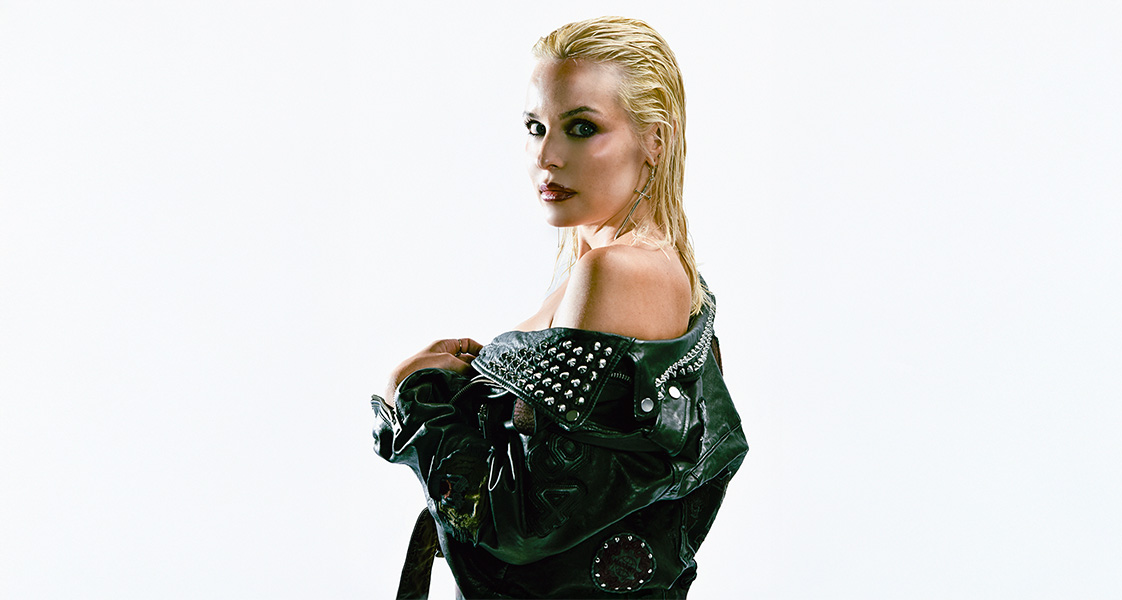
Since her emergence in 2020, Leena has quickly built a dedicated global following with her unique blend of melodic progressive house and breaks. Her music, released on esteemed labels like AnjunaBeats and Insomniac, has received support from notable DJs including Above & Beyond, Meduza and Armin van Buuren. Recognized for her talent, she achieved two BBC Radio One Hottest Records in six months and received accolades for her singles “On The Floor”, “Sweet Feeling” and her latest collaboration with Amy Wiles “Heard it all before”. As well as multiple Beatport top 10 lands on Breakbeat, Progressive House and Trance and DSP support on Night Rider, Melodic Techno Elements, New Music Friday and UK House Music. Looking ahead to 2025, Leena will release an EP on AnjunaBeats and work on collaborations with artists like Genix, Darren Tate and releases on Armada and COS. With a busy touring schedule that includes an Amnesia residency in Ibiza with Ben Hemsley, her ongoing residency at E1 and upcoming tours in Asia, her artistry continues to evolve, captivating audiences worldwide.
She recorded a new mix for our Select Cuts series, and we chatted with her about her career and what’s upcoming.
WWD: You’re entering what you’ve called a “reimagined era” — what sparked this transition into a heavier techno sound, and how does it feel compared to the earlier chapters of your artistry?
It started on the dancefloor, those late moments where the room stops being a night out and becomes something almost primal. I have always been drawn to emotion and melody, but recently I wanted more weight, more tension, more physical impact. Doing a lot of closing sets lately made that really clear, I was craving that extra touch of impact that locks the room in.
I have also been influenced by watching and studying a lot of techno sets over the past few months from Oscar L, Charles D, Amelie Lens, Nicole Moudaber, and Adam Beyer. It feels like the same storytelling, just with sharper edges, less decoration and more intention. Earlier chapters were about colour and atmosphere, this era is about pressure, release, and momentum.
WWD: When did you first realise your productions were naturally leaning toward something more techno-driven? Was it a conscious pivot or an organic evolution?
Organic, for sure. I noticed my instincts were changing before my “plans” did. The kicks got tougher, the grooves more hypnotic, the breakdowns more minimal and suspenseful. I’d sit down to write something melodic and it would naturally pull into a darker, more driving lane. The conscious part was simply deciding to commit to what was already happening.
A good example is my upcoming release on Perfecto Records. It has a driving arp and a techno-leaning foundation, but I’m still weaving in traces of my earlier influences, like breaks and sampled textures that nod to that Prodigy, Liam Howlett energy.
WWD: How do you see your new identity shaping the next phase of your career — both musically and visually?
Musically, it blends my love for techno with breaks, UK rave energy, and sampling, which I have always been deeply into. I will definitely still make some of my more melodic, emotional, and euphoric records too, that side of me is not going anywhere.
Visually, I am leaning into a more distinct punk identity. It was the original intention behind my DJ name, and it aligns better with the ethos of the project. I want it to feel like a universe you step into, not a moodboard, something coherent across the music, artwork, visuals, and live performance.
WWD: Your ‘Hestea’ night at E1 has become a real hub for your community. What’s the core vision behind ‘Hestea’, and what do you want dancers to experience when they walk into the room?
Hestea means home in Greek, which is where my heritage lies. It is also the name of my very first self-released track, so it carries real personal meaning for me. As a night, Hestea is built around immersion and belonging, a space that feels safe, inclusive, and communal. The vision is a proper rave environment with no ego and no posturing, just people connected through sound. I want ravers to walk in and feel the shift immediately, like the room is its own world and you can let go. It is about catharsis as much as it is about energy.
WWD: Fans can now watch your latest ‘Hestea’ set online – how do you approach crafting a set for a night that’s so personal to you?
I build it like a narrative. There is always an arc of tension, release, groove, and clarity. Because it is personal, I weave in my own edits, unreleased material, and moments that feel like signatures, the little details that define the night’s identity. A lot of the tracks I played were IDs that I will be releasing later in the year, and I love testing my music in the room because it helps me keep refining and improving it. I also leave space for spontaneity, because the crowd writes part of the story. If I am too rigid, I miss the magic.
WWD: You’re performing live with Ableton Push and your Roland Juno – what does performing live unlock for you that DJing alone doesn’t?
Playing live is a completely different ball game. It is thrilling, but it also takes a lot of time and preparation. The way I approach it is that I do not want to just reproduce what you can already hear on the record, so I improvise over my own tracks and sometimes over tracks by other artists in the set. It is terrifying and rewarding at the same time.
I still have a long way to go with live performance, but that is part of what excites me. Push helps a lot for structure and control. The Juno is beautiful but it is hard to program and not exactly easy to carry around, so I have been using my Arturia KeyLab as a more practical option, and it has been doing the job really well.
WWD: Last summer you held a residency at Amnesia with Ben Hemsley and Kettama – what did that season teach you about your sound and your presence as an artist?
Last summer was incredible and an opportunity I am massively grateful for. I felt very privileged to play alongside Ben and Ewan, and also to share the booth with artists I have been a huge fan of for a long time, like Alan Fitzpatrick, Deniz Sulta, and Spray.
It taught me that fluidity is just as important as having a plan. The Amnesia crowd is very specific, and it was a great challenge learning how to curate for that energy while still infusing my own sound. I also spent a lot of time this summer at the Resistance parties at Amnesia on Wednesdays as a fan, which was a huge learning curve and definitely shaped how I think about tension, pacing, and impact.
In an ideal world, the direction I am chasing is fusing those two worlds, UK rave energy and techno, into one.
WWD: Did Ibiza influence your current techno shift in any way, or reaffirm where you were already heading?
Both. Ibiza sharpened my appetite for impact and hypnotic drive, the kind of groove that does not need to over explain itself. But it mostly reaffirmed what was already happening in the studio. Being in those rooms made it obvious that this direction was not a trend chase for me, it was the most honest evolution of what I have always been drawn to.
And the truth is, techno, trance, and hard groove are not that far apart. If you look at artists like FJAAK and KiNK, or even the direction Eli Brown has been taking, there is a real way to marry those sounds and keep it feeling fresh, and that makes it even more exciting for me. I will also always love breaks, and I want to keep weaving them in as much as I can.
WWD: Faithless playing your ‘Dawn of the Dead’ edit on their tour is huge. What went through your mind the first time you saw the crowd react to your edit?
Total disbelief, and then this wave of gratitude. Faithless are part of my electronic DNA, so seeing my edit in that context felt surreal. A friend had actually sent me a video of them playing it at The O2 in London about 12 months earlier, and I later found out it was part of their Champion Tour. So when I saw them at a festival in Athens and knew it would be a shorter set, I genuinely was not sure it would make the cut.
I was there with my closest childhood friends, watching the artists we grew up on drop my edit, and it was honestly super emotional. Seeing the crowd lift on it was pure adrenaline, but also this quiet sense of “okay, this translates.” I then met Sister Bliss, who was so warm, welcoming, and completely badass. She had supported a few of my other breaks tracks in the past too, like ‘Finally’ and ‘On the Floor,’ so it really felt like a full circle moment. Those moments make the long hours alone in the studio feel very real.
WWD: ‘Heard It All Before’ breaking into the ASOT Top 50 – what does a moment like that mean to you at this stage of your journey?
It feels like a marker, not just of a track doing well, but of real momentum. ASOT is such a legacy platform, so being recognised there while I am also evolving sonically is genuinely meaningful. It reminds me I do not have to choose. I can push forward and still be heard.
‘Heard It All Before’ is also a very emotional record for me, and that is something I definitely want to keep in my songwriting, just evolved and expressed through this new, heavier palette. And it was surreal being interviewed and recognised by people I have looked up to for years, Armin van Buuren, Ferry Corsten, who I have DJed with a few times, and Ruben de Ronde. Moments like that are motivating in the simplest way. Just keep going.
WWD: You’ve been supported by everyone from Armin van Buuren to Meduza to Gorgon City. Which piece of feedback or co-sign surprised you the most?
What surprises me most is the versatility, and it really proves how fluid genres are right now. I have had support from artists across very different lanes, from Korolova and Vintage Culture through to David Guetta, Dom Dolla, and Benny Benassi, which still blows my mind.
On a more personal level, the feedback that sticks with me is when someone points to a specific element. Ben Hemsley mentioned a few times that he connects with my melodies, and Gorgon City told me they loved the energy in my more tech house leaning tracks like ‘Out Of Office’. Those moments hit differently because it is not just a co sign, it is someone recognising the details that make the music feel like me.
WWD: What should fans expect from the next chapter?
More releases, more edits, more live moments, and a deeper world around the project. Sonically it is bolder and more rave forward, with my early influences coming through more clearly, breaks, UK rave energy, and that emotional, dramatic thread that will always be part of me.
Visually it is sharper and more fearless, and Hestea will keep growing as both a community space and a brand. We have some incredible artists booked over the next few months, and one of our biggest goals with my team for 2026 is launching Hestea as a record label.
Creatively, I also want to keep collaborating with unexpected artists, ideally not only from the electronic scene, because I love that organic contrast against harder, more machine driven production. And yes, lots of touring.
WWD: Big year ahead, sounds incredible! Thanks for the chat 🙂
Thanks a lot!
Tracklist:
00.00 ID – ID
05:55 ID – ID
09:10 SOLOMUN, DENIZ SULTA – SAY NOTHING
12:40 ID – ID
17:00 ID – ID
21:00 ID – ID
25:15 LEENA PUNKS x GENIX – SO GOOD
29:40 ID – ID
32:30 ID – ID
36:30 LEENA PUNKS – CEASEFIRE
39:20 TIGA x ZYNTHERIUS – SUNGLASSES AT NIGHT (RAXON REMIX)
45:00 SVEN VATH – ROBOT (KOLSCH REMIX)
49:40 ID – ID
52:40 ID – ID
56:30 LEENA PUNKS x ROWLAND GILES – HOLDING ON