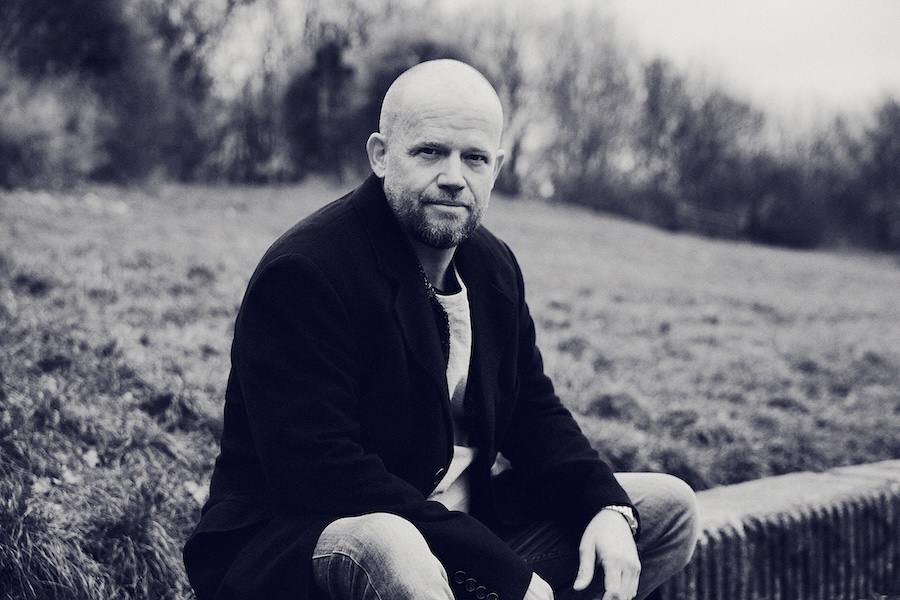
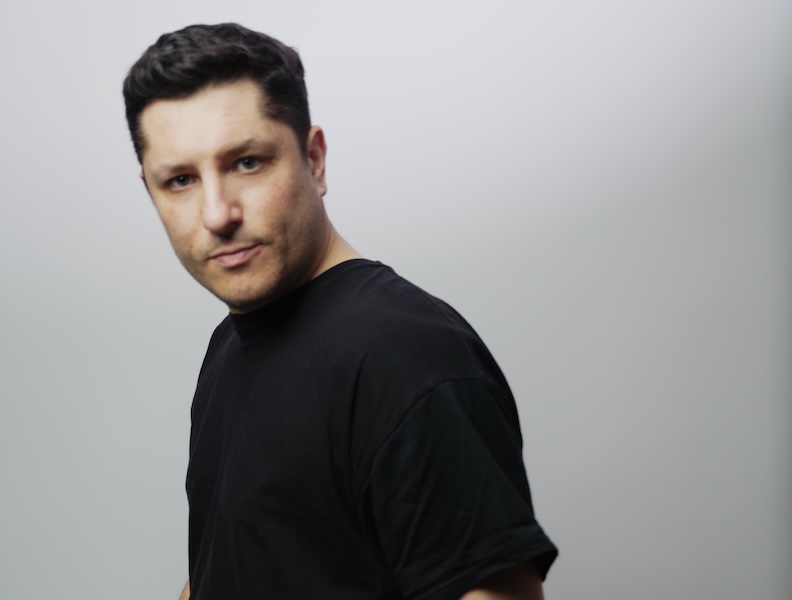
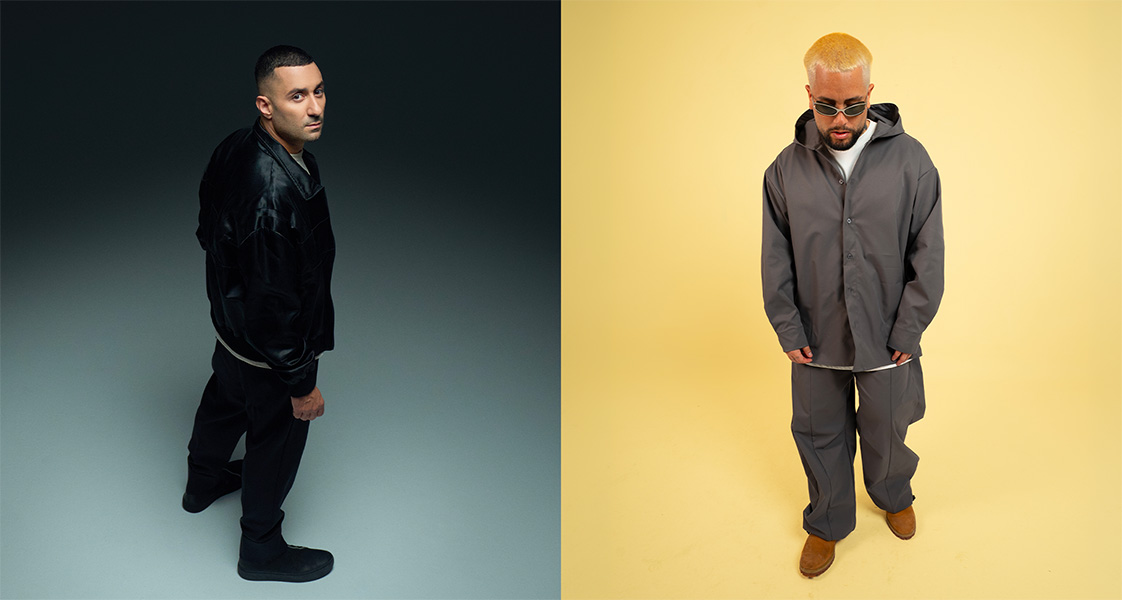
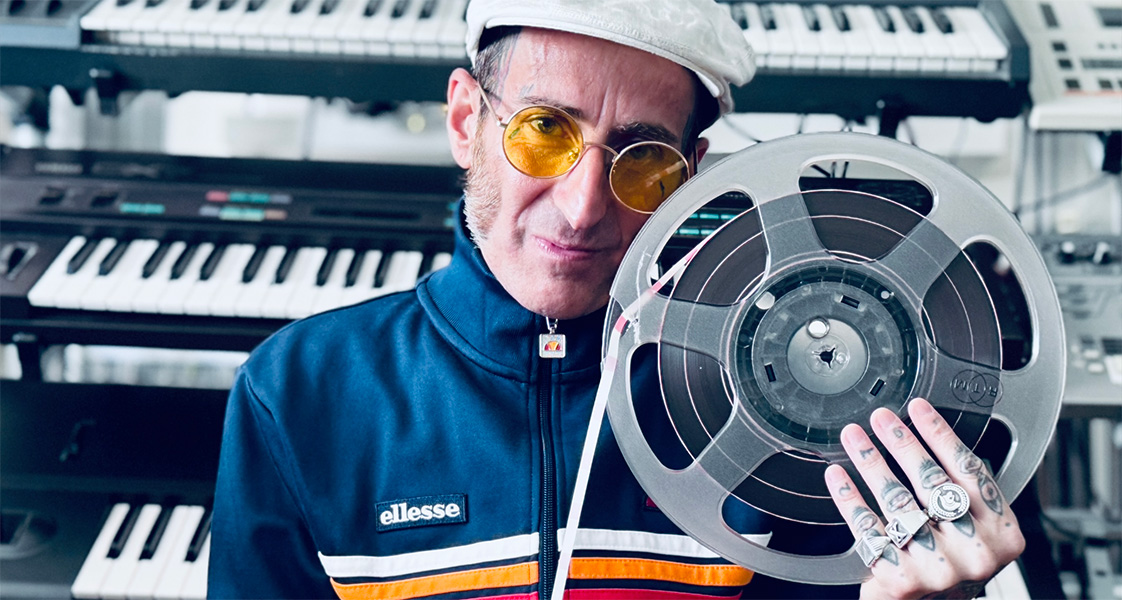
From his early days DJing in Frankfurt to his experiences in New York, Berlin and beyond, Roland Leesker has spent decades exploring the connections between House, Acid, Electro and Detroit influenced music. His career has been shaped by record shops, international collaborations and a lasting commitment to musical discovery.
In his latest release on Definitive Recordings, he revisits Soft House Company’s 1990 classic ‘What You Need,’ rebuilding the track from the ground up after hearing it played by The Three Chairs during Movement in Detroit. The release also introduces Mysterious Eastern Force, a new artistic identity through which he aims to explore different musical and spiritual directions.
In conversation with When We Dip, Roland reflects on his formative years in Frankfurt, his 1995 collaboration with Ricardo Villalobos, his work with artists including DJ Pierre, Robert Hood and Terrence Parker, and the experiences that have shaped his relationship with electronic music.
WWD: What was happening in your life when you first became seriously involved in music in the late 1980s, and what made you decide to pursue it?
Music had been present in my life from a very early age because my mother taught me to play guitar. She told me, “No matter what, music will never let you down,” and I still believe that today.
By 1989, when I began DJing in Frankfurt, I was seventeen and searching for my own direction. House music felt completely new: it represented freedom, community and a glimpse of another possible life. I did not make a calculated decision to pursue a career in music. I simply followed that feeling, and one step led naturally to the next.
WWD: What do you remember about Frankfurt’s club scene when you were coming through, and what did you take from that environment as a young artist?
Frankfurt was incredibly intense and open-minded at the time. Clubs such as OMEN, XS, Dorian Gray and our own Wild Pitch Club each had distinct identities, but House, Techno, Acid, Electro and more experimental music were all part of the same conversation.
Working at Delirium Records was equally important because the record shop was a meeting point. People like Sven Väth, Derrick May and John Acquaviva came through, and music was constantly being exchanged and discussed.
I learned that a DJ needed curiosity, knowledge and courage, as well as technique. You had to develop your own sound and learn how to tell your own story.
WWD: Your early work came out of a very different period for House music. What was the process of making and releasing records like for you in those early days?
Everything was slower, more limited and more physical. Studio time and equipment were expensive, and you could not endlessly correct things or recall a session. Those limitations forced you to make decisions and commit to them.
Releasing a record meant cutting a master, pressing vinyl, finding distribution and waiting for the first reactions from record shops and dance floors. There were fewer records, so each one seemed to carry more weight. The process was imperfect, but those imperfections often became the character of the music.
WWD: You worked with Ricardo Villalobos on the R+R project in the mid-1990s. How did that collaboration begin, and what do you remember about making ‘L’Essentiel?’
Ricardo and I knew each other through Frankfurt’s close-knit music community. We were both curious and still discovering what electronic music could become.
We made “L’Essentiel” in 1995 in his living room, working with a very modest setup and building the track from loops and subtle changes. Nobody was thinking about algorithms, formats or content. We simply wanted to create something that fascinated us. We listened to our hearts and created within the flow.
And what I remember most is the freedom of that process and the love and warmth of Ricardo’s parents cooking lunch for us while we were producing.
WWD: Looking back at your music from the 1990s, do you feel there was already a recognisable Roland Leesker sound, or were you still trying to work out your identity as a producer?
I was definitely still searching, and I still am. I do not think artistic identity is something you decide intellectually. It emerges gradually through the choices you repeat.
Looking back, I realise that I have always tried to find emotion within machines and to create a conversation with them. It is almost like making love to the machines.
WWD: You have worked in and around House, Acid, Electro and Detroit-influenced music for decades. Were those styles always naturally connected for you, or did your interests change significantly at different points?
I absorbed those styles almost like mother’s milk through my work at Delirium Records in Frankfurt. Heiko M/S/O was both my mentor and the store’s head buyer. He practically forced me to listen to every important record that arrived and to take them home with me. That was my real musical education.
Because of this, I never experienced House, Acid, Electro and Detroit Techno as separate genres. They were different expressions of the same musical language and became deeply connected within me from the beginning.
WWD: How did your time in New York and later Berlin affect the way you approached making music compared with your early years in Frankfurt?
Frankfurt gave me my foundations, but New York expanded my understanding of what House music represented culturally. When I moved there in 1995 to open the first international branch of Delirium Records, I experienced a city where music, identity and survival were closely connected. It broadened my perspective and made it less purely European.
Berlin later gave me the foundation and space to bring all those experiences together. These cities – as well as my beloved Rio de Janeiro, which I like to call my second home – represent different parts of my musical identity.
In all of these places, I met inspiring, open-minded and generous people who became part of an international network of friends and partners. Without those relationships, I would never have come this far.
WWD: As your career developed, you worked with artists such as DJ Pierre, Robert Hood and Terrence Parker. Were there particular encounters or collaborations that had a lasting impact on you?
These exchanges did not always happen through traditional studio collaborations. Some developed through remix projects and work within our label family. Hearing these artists reinterpret my music has always been incredibly powerful. It makes me deeply happy and grateful.
My connection with DJ Pierre, however, goes back to my residency at Frankfurt’s Wild Pitch Club and his legendary Wild Pitch mixes on Strictly Rhythm. What began through music developed over the years into a deep personal friendship.
When I produced his album ‘Wild Pitch: The Story So Far’ with him, I flew to Atlanta to complete the final pieces. I was literally living in his studio for a week. The place had no windows or climate control, and Pierre did not want anyone beside him while he was working on the tracks. So he put me in a smaller room, where I produced music with his companion in the meantime.
I think my absolute determination to finish the album impressed Pierre, and we became very close during that process. His way of seeing and hearing music – and life itself – has opened both my eyes and my heart. He deserves the greatest respect and support.
WWD: When you heard Soft House Company’s ‘What You Need’ again in Detroit, what made you want to remake it rather than simply revisit it as a DJ?
I heard The Three Chairs play it during Movement in Detroit about two years ago, and it hit me straight in the heart. Almost thirty-five years after the original release, the emotional reaction was still immediate.
I initially wanted to work with the original recording, but when that was not possible, I decided to rebuild the track completely and create my own cover version. It became more than simply revisiting an old favourite. It is a tribute to Claudio Rispoli, to the original record and to the emotional quality that allows great House music to travel across generations without losing its power.
WWD: The release also introduces Mysterious Eastern Force. What prompted you to create a separate identity for this music, and what do you want to explore through it?
Mysterious Eastern Force gives me the freedom to take my music to places I have not been before. It allows me to go deeper and perhaps approach music in a more spiritual way.
I will also use this identity to feature unknown artists and unheard voices, allowing them to enter the music without revealing everything about who they are.
WWD: We can’t wait to hear more! Thanks for the chat 🙂
Roland’s reworking of Soft House Company’s ‘What You Need’ brings together a longstanding connection to House music history and a contemporary production approach.
Released alongside the Mysterious Eastern Force Edit, the project pays tribute to Claudio Rispoli while opening a new chapter in his artistic journey.
Roland Leesker’s ‘What You Need’ is available on Definitive Recordings from October 2nd, 2026. Stream & purchase here