
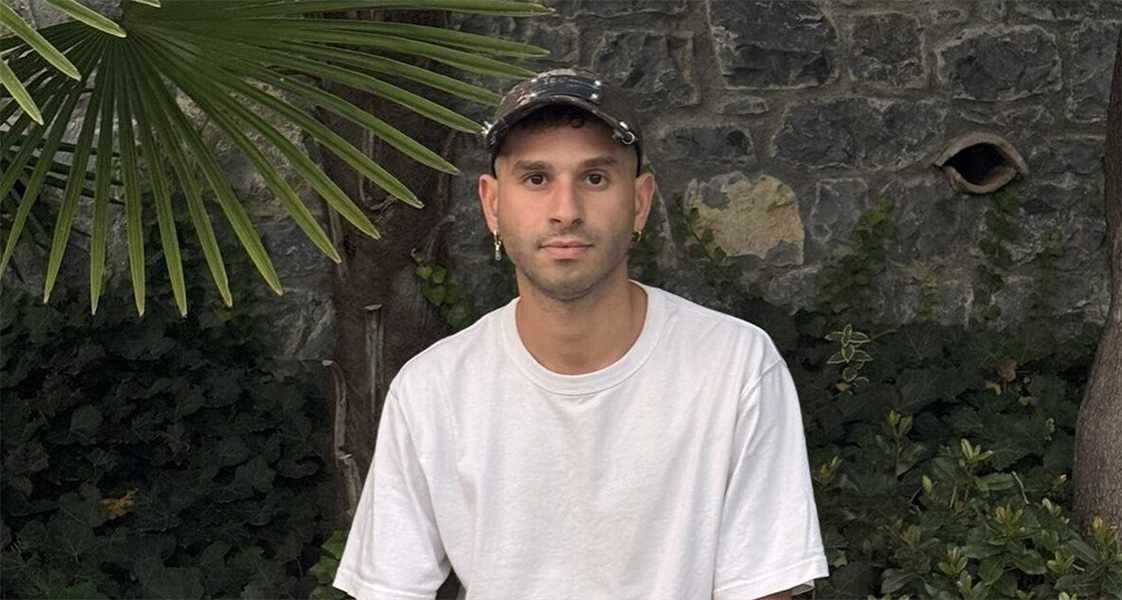
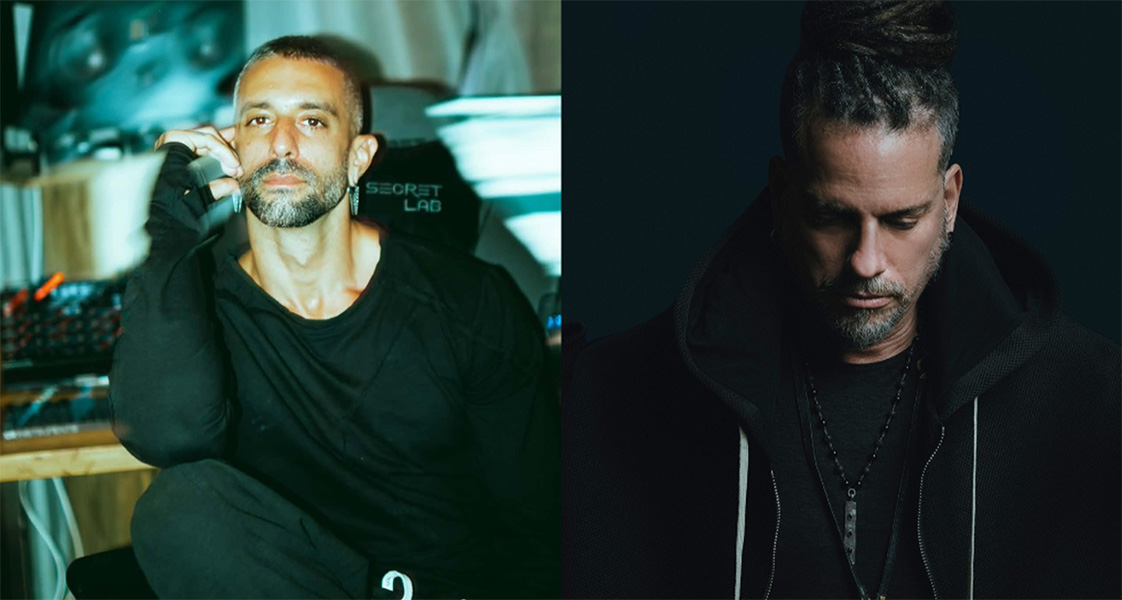
Spicy Sofi is a Paris-based DJ, producer, engineer and live performer, co-founder of Morninglory, half of Vigilance Zero and creator of SOFI AIRLINES. We sat down with him to discuss his Sofi Airlines project. We delve deep into how his aliases allow him to express himself and the inspiration behind his carefully curated projects.
WWD: What was the highlight of 2026 for you?
Without a doubt, performing SOFI AIRLINES live for the very first time at Morninglory’s 5th anniversary.
It was incredibly special because I got to share that first performance with Le Ploum, my best friend and musical partner in Vigilance Zéro. It also came after a particularly challenging year for Morninglory. Like many independent collectives, we’ve been navigating an increasingly difficult cultural landscape, where keeping events alive and bringing people together takes enormous effort.
So celebrating five years of Morninglory, surrounded by our community, while finally bringing my own live project to the stage alongside my best friend felt like everything was coming together.
Another huge highlight was touring Morocco with Vigilance Zéro, especially our set for Super Fragment in Essaouira. Sharing that experience with Le Ploum, bringing our music to a different audience and creating beautiful memories together made it another unforgettable moment of the year.
And then, a few months later, I packed up my little cockpit and took it all the way to Japan! Performing at Intergalactic Festival and LiQUiD Paradise, then returning to France to continue developing the project and receiving so much positive feedback, was incredibly rewarding.
I think 2026 was the year when my music, engineering background, friendships and community finally came together into something I could never have imagined.
WWD: You’ve recently toured Japan and are now taking your sound across France. How have the experiences compared? Have you noticed any differences between the audiences?
Both Intergalactic Festival and LiQUiD Paradise had strong techno and psytrance influences, while my live show sits somewhere slightly different, around 135 BPM, with progressive house, some acid and occasional techno-driven tracks.
I was curious to see how people would react, and the response was incredible! I think the combination of the music, DIY approach, upcycled aircraft equipment and engineering really resonated with those audiences.
But what surprised me most was discovering how much we had in common.
In France, particularly through Morninglory and Vigilance Zéro, we’ve worked hard to create dancefloors where people feel safe, free to express themselves and completely let go. Our audience is familiar with my musical influences, and there’s a strong sense of trust within the community.
In Japan, I found exactly that same spirit. The organizers had done an exceptional job with the scenography, sound systems and hospitality, creating an environment where everyone felt comfortable and open to discovering something unexpected.
I arrived wondering how my music would connect with a completely new audience, and left feeling like part of the family.
That was probably the most beautiful discovery of the tour.
WWD: You perform as Spicy Sofi as a DJ and SOFI AIRLINES as a live act. How do these two projects allow you to express different sides?
As Spicy Sofi, my DJ sets are like a collection of musical memories.
Before becoming a DJ or producer, I was a dancer, discovering underground music through years of partying and exploring different scenes. I grew up in Tunis, spent time in Brittany, Grenoble, Berlin and Paris, and places like Concrete and Panorama Bar helped shape my musical identity.
My sets bring together those influences, mixing my own productions with records I’ve collected over the years, particularly 90s vinyl, moving between minimal house, electro, progressive house, trance and sometimes techno.
DJing is very spontaneous for me. I adapt to the time, the crowd’s energy, what the previous DJ played and how the dancefloor evolves. My goal is to create moments where people completely let go and feel free to be themselves.
SOFI AIRLINES shares the same musical DNA, but follows a more structured journey, almost like an actual flight, from pre-flight checks and boarding to takeoff, cruising, turbulence and landing.
I currently have around fifteen original tracks that I can select and rearrange depending on the audience and the duration of the show. The cockpit gives me a completely different way of performing, with additional faders, rotary controls, switches and levers that let me manipulate the music live, skip sections or create unexpected transitions.
Spicy Sofi is about sharing the music and memories that shaped me, while SOFI AIRLINES is about creating an entirely new world from them.
In both cases, the goal remains the same: making people dance and lose themselves in the moment.
WWD: SOFI AIRLINES uses real aircraft cockpit components as musical instruments. Where did the idea come from, and what first inspired you to bring aviation into your performances?
Aviation has always been part of my life. My mother was a flight attendant, so I grew up surrounded by that world, fascinated by the beauty and complexity of aircraft.
Later, while studying in France, I spent several summers working at Paris Charles de Gaulle Airport, while also discovering electronic music and gradually finding my identity as both an artist and an engineer.
But the actual idea for SOFI AIRLINES started with a photo!

In the music studio where I go to mix my tracks, Le Refuge, in Paris’s 11th arrondissement, there’s this beautiful black-and-white artwork of an airplane hanging on the wall. I would walk past it countless times while making music, and one day it made me wonder why I’d never brought my lifelong fascination with aviation into my musical world.
One day, in the middle of making music, I looked at it and wondered why I’d never explored my passion for aviation through my art.
Initially, I imagined an aviation-inspired EP or album. Then I started researching aircraft equipment and discovered a fascinating community of aviation enthusiasts, collectors and engineers, along with countless real cockpit components that could be recovered and repurposed.
That’s when things started getting a little out of control! 😂
What began as a simple musical inspiration became the idea of transforming real Boeing and Airbus equipment into instruments.
I love that something as ordinary as walking past a painting ended up reconnecting so many different parts of my life.
WWD: You’ve designed much of the hardware, software and creative technology behind the show yourself. How does your background in engineering influence the way you approach things?
My engineering background influences almost everything I do, from building the cockpit to producing music.
I’m a software architect by profession, so I felt confident I could create the software layer needed to connect aircraft components to my music. But years of experience have also taught me to think about reliability, maintainability and security.
I apply the same mindset to music production. I organize my creative process into stages, set deadlines and separate sound design, composition, arrangement and live performance preparation. It might sound rigid, but I find that structure actually creates freedom.
And there’s one essential engineering principle: assume that everything can eventually fail!
Just like in aviation, you need backup systems. My audio engine remains independent from the experimental cockpit controls, so if something stops responding, the music keeps playing and hopefully nobody notices that the pilot is dealing with a technical emergency! 😂
Making the setup portable and plug-and-play has also been a huge challenge. The first time I performed for friends, it took me over three hours to install everything. That was painful, but it pushed me to make the system more reliable and compatible with different venues and mixing desks.
I also feel lucky about the timing. I’ve reached a point where my experience as an engineer and musician meets increasingly accessible technologies like Python, MIDI, OSC and Ableton integrations.
I no longer see engineering as something separate from my artistic identity. It’s one of my creative instruments.

WWD: The SOFI AIRLINES show is structured like a flight, from boarding and takeoff through to turbulence and landing. How important is storytelling and creating an experience for the audience?
Storytelling is essential to me, whether I’m DJing or performing live.
I want people to feel part of a musical journey, whether they arrive at the beginning, halfway through or towards the end. There’s something magical about sharing loud music in a space where everyone feels free to forget the outside world and be themselves.
With SOFI AIRLINES, I wanted to take that experience further by creating an entire audiovisual universe.
The audience becomes our passengers. They get their boarding passes, join me for the pre-flight checks, discover the different cockpit instruments and eventually take off together.
I’m also collaborating with FMR XR, a creative studio based in Tunis, on an audiovisual show where live performance data is sent over the internet to influence the visuals in real time.
We’re developing a virtual aviation universe, with an aircraft departing from Spicy Airport and flying through different environments, including Paris and its iconic monuments. There’s even a little tribute to our label, Grands Boulevards Records.
Sound design plays an important role too, with cockpit announcements, aircraft effects and unexpected surprises throughout the journey. My wife, Rachelle, actually lends her voice to the onboard announcements, so she’s basically the official voice of SOFI AIRLINES, while I’m the slightly questionable pilot! 😂
Ultimately, I want people to feel that we’ve all boarded the same aircraft, shared an adventure and landed somewhere together.
WWD: Your sound draws on 90s progressive house, electro, acid and breakbeat. What is it about these styles that inspires you, and how do you bring them together into something yours?
What I love about 90s progressive house is the incredible creative freedom you can hear in those records.
I feel like artists were less constrained by the genre categories we know today. They explored unexpected influences, samples, arrangements and sounds without necessarily trying to fit into a specific formula.
That’s the spirit I want to bring into SOFI AIRLINES: the freedom to create music at whatever tempo I want, mixing influences without worrying too much about labels.
I still borrow some recognizable elements from that era, like groovy, slightly tribal drums, atmospheric pads and bleepy melodies, but I try to give them a contemporary twist.
Electro brings a more robotic, conversational dimension. I love the idea of machines communicating with us, which is why the cockpit has its own personality through voices and effects that I can manipulate live.
Acid is my way of building and releasing tension, while breakbeat lets me change the rhythm, introduce different grooves and give the audience space to breathe before the next energetic moment.
Each influence has its own role in the musical journey.
Ultimately, what inspires me most about 90s progressive house isn’t just the sound. It’s the freedom those artists had to experiment, and that’s what I’m trying to preserve in my own music.
WWD: You’re also a co-founder of Morninglory in Paris. What was the idea behind starting that, and what role do independent collectives and communities play today?
Morninglory started from a simple desire: creating the kinds of parties we wanted to attend ourselves.
For us, it has never been just about booking DJs and filling a venue. It’s about building spaces where everyone feels welcome, where sound quality matters, where artists have creative freedom and where people can genuinely connect.
We particularly love extended events because they give music and relationships time to develop. There’s something beautiful about watching a dancefloor evolve over many hours, with strangers gradually becoming friends.
I think independent collectives are more important than ever, especially in today’s challenging cultural and economic environment.
They’re the ones taking risks, supporting emerging artists, experimenting with formats and keeping local scenes alive, often with very limited resources.
They also remind us that electronic music isn’t just an industry. It’s a culture built around sharing, friendship, creativity and collective effort.
A huge part of who I am as an artist comes from being involved in that community, both behind the decks and behind the scenes.
WWD: What is coming up next for you?
Quite a lot actually!
We’re continuing to develop the audiovisual side of SOFI AIRLINES with FMR XR, exploring new formats that could take the show beyond traditional nightclubs. I can’t reveal too much yet, but we’re working on some exciting possibilities.
I’m also building new components for the Spicy Cockpit to introduce more improvisation and unpredictability into the live performance.
One experiment I’m particularly excited about involves combining real-time air traffic data with my own performance data, allowing the cockpit, music and visuals to react to what’s happening in the skies. The idea is to make every flight genuinely unique, with surprises that even I can’t fully anticipate!
Musically, I’m preparing to release my first solo EP at the end of November. I started producing almost ten years ago, but I’ve never properly released a solo project, so this feels like a huge personal milestone.
We’re also working on a new VIGILANCE ZERO album with Le Ploum for 2027.
And to close the year, we’re preparing a big New Year’s Eve celebration at Dock B in Paris with Morninglory, bringing several collectives together.
The flight schedule is getting pretty busy!
WWD: What are your goals for 2027, and what would you like to achieve with your music and live show?
My biggest ambition is to keep developing SOFI AIRLINES into a truly immersive audiovisual experience while staying connected to the underground electronic music culture that inspired it.
I’d love to bring the cockpit to more festivals, clubs and unconventional spaces around the world, especially places where the aviation concept can become part of the experience.
Airports, warehouses, hangars, aviation museums… There are so many exciting possibilities to explore.
I’m also interested in artistic residencies and collaborations that bring together music, engineering, visual art and technology.
Musically, I want to release more of my productions and keep developing a sound that feels personal, playful and free from strict genre boundaries.
But beyond bookings and milestones, my biggest goal is to preserve the curiosity that started this whole adventure.
I never want the project to become so polished that it loses the experimentation, spontaneity and slightly ridiculous ideas that make it special.
If 2026 was the year SOFI AIRLINES took off, I’d love 2027 to be the year we discover just how far it can fly.
WWD: What advice would you give to young and upcoming producers, DJs and live acts?
First, don’t feel pressured to look or sound like everyone else.
There’s so much content online telling artists what equipment to buy, what genre to produce, how often to post and how to become successful. But I think the most interesting things happen when you follow your own curiosity and create something that reflects your personality.
Learn how your tools work, experiment, make mistakes and don’t be afraid to build things yourself. You don’t need to be an engineer to develop your own creative process or invent new ways of making music.
And never underestimate the importance of community. Go to parties, support other artists, help organize events and build genuine relationships. Some of the most meaningful opportunities in my life came from friendships rather than networking.
Finally, remember that social media is a tool, not the purpose of making music. It can help people discover your art, but it shouldn’t define what your art becomes.
Make things you genuinely love, share them with people and enjoy the process.
And if your idea sounds slightly ridiculous, that might actually be a good sign. I built an airline out of old aircraft parts, so I’m probably not the best person to discourage anyone! 😂
Spicy Sofi: Instagram / SoundCloud