
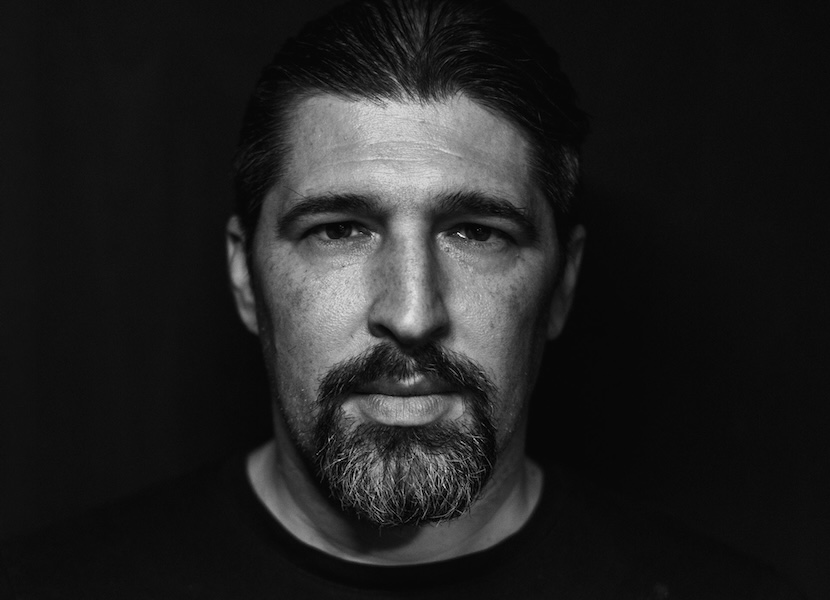
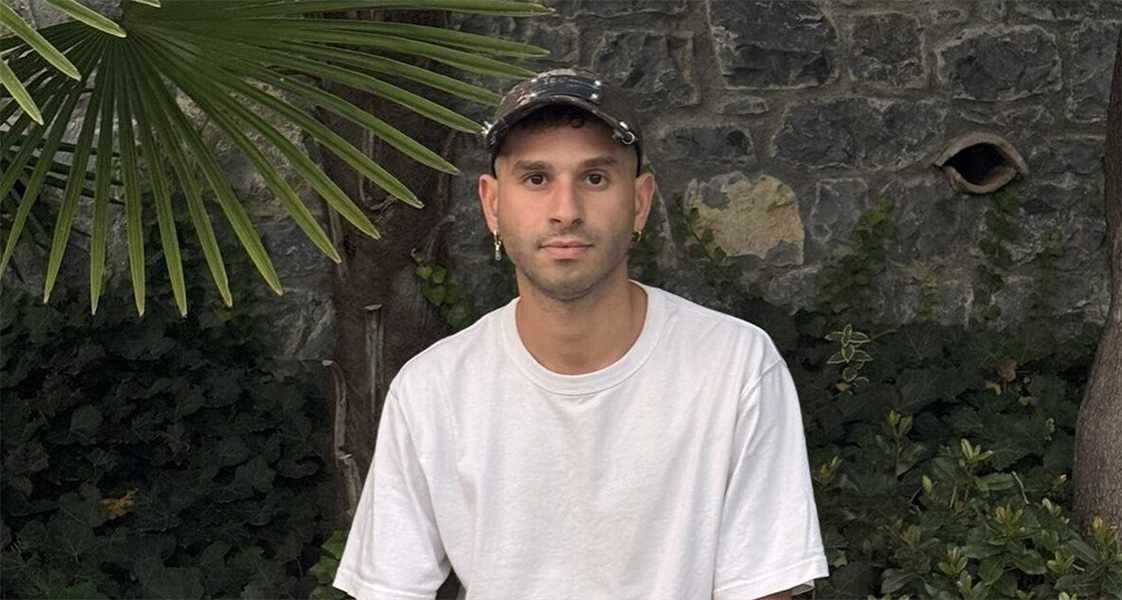
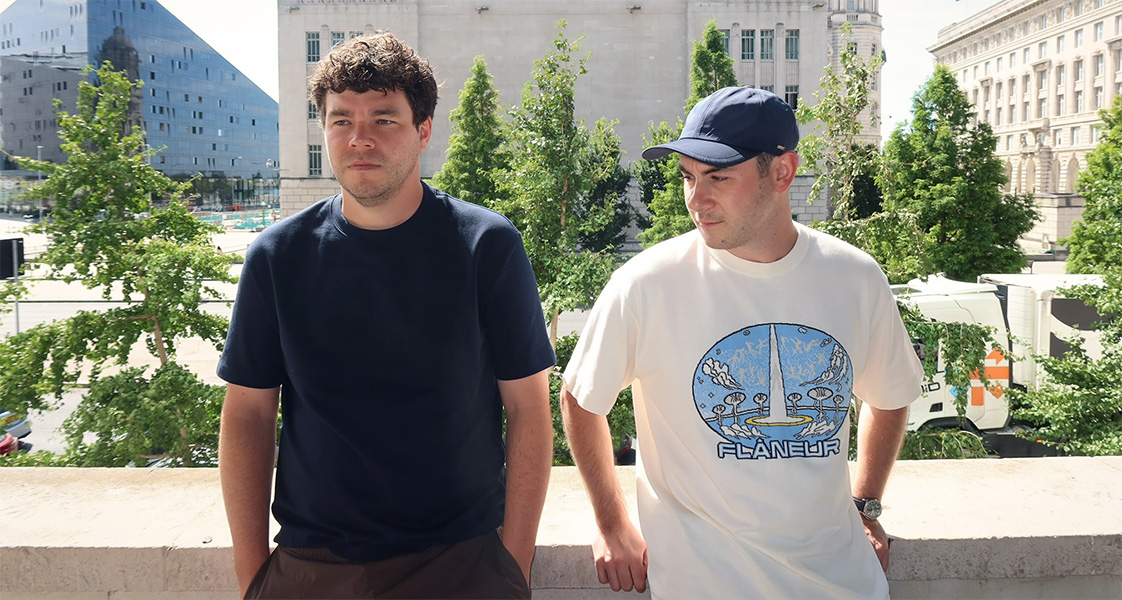
Bernhard Pucher, better known as B-Pushr, has been immersed in electronic music since the late ’90s, building his sound in Vienna before making his mark in the Dallas scene alongside names like Maceo Plex. As the founder of Iron Box Music, he helped carve out a distinctive, harder-edged approach to minimal house, releasing music on respected labels and playing legendary venues including Berghain and Tresor.
After stepping away from electronic music in 2008 to pursue a career in film, Bernhard made a welcome return in 2025, reigniting both his production career and Iron Box Music.
Now, he’s back with something particularly personal. His new single, ‘Spiral,’ featuring London vocalists Imani and Via, marks his first new release on Iron Box Music since 2008. A brooding, glitch-driven minimal house production, the track channels a period of personal turmoil into something creative, powerful and ultimately triumphant.
To celebrate the release, he stops by for a chat about the reasons behind the big return, directing music videos for Maceo Plex, collaborative approaches, and more.
WWD: Nearly two decades away from producing and DJing is quite a break! You stepped away in 2008 as your film career began to take off. Did you ever imagine you’d return to electronic music, or was there always a feeling that unfinished business was waiting for you?
In the years since I’ve put music on the back burner, I kept fantasising about coming back. I would regularly see Maceo play and take in the amazing vibe of playing to a crowd, and there would always be this little voice that says, “Come on, you love this,” only for the other voice to go “, nah, you’ve been there, done that. It’s fine to move on.” … and so I did. Occasionally I’d dabble in production and DJing (especially during COVID), but it was always just a reminder that I’ve moved on, and what I really want to do is be a dad and make movies.
It wasn’t until my younger son, Vincent, got into music production that the itch started getting really real. But I was still in a relationship, and I still had my full-time job, so the time simply wasn’t there to do anything about it. But when the relationship abruptly (and quite painfully) ended, I found myself with a lot of spare time.
That’s the moment I thought “Fuck it. Why not.” But I told myself: “If i’m doing this, I’m doing this for real. None of that hobbyist bullshit.” The moment I opened up that avenue for self-expression, it just poured out of me.
WWD: You started collecting records back in 1996 and began producing that same year. Looking back at those early days in Vienna, what was the electronic music scene like, and how did it shape the artist you eventually became?
I was 16. I was lucky enough that my father still had some of his gear from when he made electronic music in the 80s (but none of that stuff was really appropriate for techno or house). Plus I was very much into a wide mish mash of trance, techno and progressive house. To be honest, at the time, I didn’t even know there was a difference. I just bought every record that I heard somewhere.
It was just lots of enthusiasm and spirit. Every weekend I’d be at a rave, club or after party. My favourite one at the time was a rave series called BIOSPHERE, which is actually getting a revival right now. It was a fun place with good friends to get started.
WWD: Your move to Dallas in 1998 seems to have been a real turning point. Connecting with Stefan Weise and Eric Estornel, aka Maceo Plex, introduced you to minimal, deep house and electro. How transformative was that period, and what did those musical relationships bring out in your sound?
The first big shift in my sound in 1998 was my first real exposure to big beat breaks, which I’d never heard before. Crystal Method, Propellerheads, BT, Fatboy Slim (even though I already knew of The Prodigy). Stefan Weise at the time was quite heavily into BT and Hybrid. Then in 1999, Nine Inch Nails released The Fragile, which completely blew me away and shifted everything I did into a darker industrial tone. I also started making more downtempo and exploring more cinematic textures (even if I wasn’t musically equipped to actually do more with it). I was just into a rich smorgasbord of genres and styles.
And then in the 2000s, Stefan introduced me to Techno as a definitive genre, rather than as an expression of “all dance music” … and showed me a bunch of the techno vinyls he’d bought over the years. And I was hooked. THIS is what I wanted to do. So that sent me down a path to making and buying techno.
And the best place to buy techno was a record store called ILLMATIC RECORDS on I-75 in Dallas, owned by Lacy Lawson, employing the very Eric Estornel, who’d become Maceo Plex.
While he was never into techno like I was, he respected the tracks I was making. And when I asked him if I could remix one of his tracks… what actually came out was a tech-house track (not that I really understood what that was). I just used the sounds he gave me and made a track that felt appropriate. And Eric loved it. That’s how the first Iron Box Music tracks were born.
WWD: You launched Iron Box Music back in 2001, at a time when you were developing a much harder-edged take on minimal, influenced by industrial rock and heavy metal. What was the original vision for the label, and how does that vision compare with what you’re building today?
There wasn’t really a vision per se. It was more like, “Hey, I know we’re sending out demos to labels. But we could release some of our own stuff ourselves. I have a bit of cash; I could do that with.” Eric had some experience self-releasing records, so he showed me the ropes a bit on how it all works.
After remixing his track, we got a few more together and just started doing stuff together. It wasn’t more than that.
Eric also had a darker sound to him than what was commonly made, though his stuff was more influenced by breaks, etc., as opposed to my industrial influences. I was also much more minimal than him in my production style.
But there wasn’t really a vision. We just liked what we did, and I’d put out stuff that fit together.
WWD: Let’s talk about ‘Spiral’, which is your first new single on Iron Box Music since 2008. The track comes from a particularly difficult and emotional chapter in your life, following the end of a relationship. At what point did you realise that writing music could become a way of processing those emotions and breaking out of that cycle?
I’ve done that a few times in my earlier tracks, where I deliberately sought a way to process what I was going through. I previously wrote a track called “Dear Father” where Cristy Jordan sang the vocals. The lyrics were about her father and how he would never fully accept me as a partner because I wasn’t of his faith. I wrote the song from her perspective.
Another song I wrote was called “Obsession” under my Confutatis moniker. The lyrics are about an inner monologue where I wondered whether Cristy really loved me. When I wrote the words, I had expressed my love for her, but she told me she wasn’t ready to say it yet. So I sometimes would lie in bed in the morning, wondering if she’d ever love me back. Luckily for me, she did, and we were together for 12 years and had two kids.
Spiral was born in similar circumstances. Expressing my feelings and emotions through my words is incredibly helpful and gets some of my thoughts out of my head and into the open. Another thing that helps me a lot these days is that I’m much better at writing lyrics than I was back then. Filmmaking has taught me a lot, so finding the words for my feelings this time around was much easier.
It took a massive weight off my chest.
WWD: The track features two London-based vocalists, Imani Ng’ethe and Via Summer, who come from quite different musical backgrounds, with R&B and hip-hop on one side and rock on the other. How did you bring them together, and what did their individual voices add to the emotional character of the track?
They are fellow students of my son. Vincent is in music school at the Rhythm Academy here in London, and when he brought them over and I heard them sing, I immediately knew they were the perfect voices for Spiral. They were so easy to collaborate with, and they brought a maturity to their singing and style that I wasn’t expecting at all. It was a huge pleasure working with them, and I will definitely write more music with them in the future.
WWD: There’s an interesting contrast in ‘Spiral’: the subject matter is quite dark and introspective, but the production has this hypnotic, glitchy groove and a seriously weighty bassline. How important was it to balance the emotional heaviness of the lyrics with something that still works on a dancefloor?
I find emotional honesty connects people even more with the music, no matter the tone or genre. Real substance always connects with people, even on the dancefloor, and I’ve always felt this is something I’d love to explore more. Bring an emotional rawness to minimal that’s accessible, even if you’re not necessarily into glitchy house. After playing the song a few times, the crowd is totally there for it.
WWD: The release comes with a Vinnx remix, several alternate versions and even a vocal stem available for non-commercial remixes. We love that you’re actively inviting other producers to reinterpret the track. Is that collaborative, open-source approach something you’d like to explore more with Iron Box Music?
Absolutely. I really hope DJs use the vocal stem to do live remixes with other tracks, or someone decides to do a drum ‘n bass or garage mix of it. I would love that. Why not? Plus, it’s better than just using some generic sample from Splice or some AI nonsense. Go for it! Make the song your own. I can’t wait to hear it. And if enough people bite, you can bet your ass I’ll do more of it!
WWD: You’ve also had a fascinating career behind the camera, directing music videos for Maceo Plex, including the concept performance video for his 2023 album ’93’. Has your experience in filmmaking influenced the way you approach music production, storytelling or even the visual identity of B-Pushr?
I’ve always had a strong visual style in my music, and my music taste has always heavily influenced my visuals. They have always gone hand in hand and have never been separate to me. That’s why I’m glad that I can do both at the same time now. That’s never been the case for me before. I get to make music while also making films. I can’t wait to see what this period in my life will bring.
WWD: After relaunching Iron Box Music and returning to the DJ booth and studio, it feels like a new chapter is properly underway. What’s next for B-Pushr? Can we expect more releases, collaborations or perhaps a renewed focus on taking Iron Box Music back onto the international electronic music circuit?
It’s too early for me to announce any collaborations right now, but I’m certainly talking with people about working together. I do have another EP on Iron Box coming up in 2027. Also, I did an electro remix for Stefan Weise’s Science Cult label that’s due out in January. And my remix for minimal legend Mathias Schaffhauser is out right now! Exciting road ahead!
WWD: Very, we can’t wait to hear more! Thanks for the chat 🙂
‘Spiral’ is available here